

PhD work
2024-Ongoing
University of Bristol, Centre for Sociodigital Futures
Oracular Interfaces: (De)mystifying AI systems through the Metaphorical Framework of Divination and Magic
Using Design Research methods, I am looking at Divination and Magic as specific, culturally situated practices of Knowing and Doing in the world, using them as a metaphorical framework to critically question interactions with Artificial Intelligence (and AI as a practice of Knowing and Doing).
The research is led by practice, through the development of Oracular Interfaces: provocative objects that “speak” and enable interaction with the form and shape that AI systems take. I started characterising my approach as Epistemic Mischief: a form of playful misuse of technologies of knowledge, a sincere and participatory method of generating insight.
Below, you can get more information on AI experiments related to the thesis:
︎︎︎SPELLMARKET (WIP)
︎︎︎House of ifs (2026)
︎︎︎BIRD - Webcam Augury (2025)
︎︎︎Data Poets (2019-25)
︎︎︎Botter (2023-25)
︎︎︎Omen.OS (2023)

Fig. 1: Enquiry Space

Fig. 2: Aims of the metaphorical framework

Fig. 3: Literature review

Writing / Publications
2026 - Essay
(de)mystifying AI systems: unknowing and ambivalence through mystical knowledge is an essay developing the concept of (de)mystifying as a critical approach to AI. Drawing on mystical epistemologies, apophatic thought and postcritique, it explores how experiential and partial forms of knowledge can proposing situated encounters with AI.
2026 - NordiCHI - Vaasa
Oracular Interfaces: Divination and Magic as material for probing interactions with AI is a short critical visualisation paper presenting House of IFs; the website and prototype were presented at Vaasa alongside a presentation of the conceptual and design basis of the project.
2026 - UNLOOP - Porto
Oracular Interfaces: Epistemic Mischief as a Method for Playful Friction to Subvert AI Systems Through Divination and Magic Metaphors presents two Oracular Interfaces, BIRD and House of IFs, which use divination and magic metaphors to question the conversational authority of AI systems. The paper develops “Epistemic Mischief” as a method for introducing playful friction into interactions with generative AI, to make its apparent fluency strange and opening the values embedded in AI interfaces to critical thought.
2026 - World Futures Review
AI & The Oracle: Future Interfacing Technical Objects and the Reflexive Practitioner in Futures Studies (co-authored with Santini Basra) critically examines the integration of AI into Futures Studies. Juxtaposing divinatory practices such as the Delphi Oracle and Tarot with methods including scenario planning and wargaming, we question deterministic understandings of AI as a tool for knowing the future. Instead, we argue for the human practitioner as the “Oracle”: a reflexive mediator who interprets, questions and negotiates meaning when working with AI and possible futures.
2025 - Environment and Planning F - University of Bristol
Data poets: Co-interpreting urban ecologies with generative AI prototypes in psychogeographic walks discusses a project that uses small AI devices (the Data Poets) and an interactive website during psychogeographic walks to prompt reflection on what we sense in urban spaces. It contrasts participants’ embodied perception alongside AI outputs, to question data-centric accounts of “urban ecology” and to explore and critique how/whether AI can act as a dialogic other in place-based research.
2025 - xCoAx - Dundee
Botter, Social Media for bots is the paper from the proceedings of the 2025 xCoAx conference in Dundee, where the Botter project was exhibited. Botter is an interactive artwork and speculative social media platform populated by AI-generated mis-information, released in September 2023. The paper recontextualises the project and uses it as a jumping point for critiquing the prevalence of generated media today.
2024 - Foreign Objekt Posthuman Lab
Narcissus, Agency, and the Mirror as Interface discusses the distributed agency of AI chatbot interfaces through the conceptual framing of mirrors and divination practices such as catoptromancy. It draws from theories of interface aesthetics, the postmodern shift in computing, and the narcotic effects of AI interaction, and it interrogates how these interfaces shape perception, engagement, and autonomy. The chatbot, like a scrying mirror, reflects the user’s input, amplifying desires and biases while obscuring the underlying system’s agency.
2024 - After AI Symposium - Open University
AI Atemporality vs. Recursive Sacred Time: The plural Machine-Now is a conference paper where I argue that contemporary AI models inhabit an atemporal, amotivated “machine-now”; they respond reactively without genuine memory or anticipation. Set against cyclical notions of sacred time from pre-industrial magical practice and Eliade’s sacred/profane temporality, the paper proposes drawing on “rejected knowledge” and ritual to design collective practices for imagining desirable futures after AI.
2019 - Glasgow School Of Art
Creating worlds : Exploring Participatory Behaviour in Gaming Communities is my master’s thesis. It is an exploration into the parallels between the motivations of players to participate in a game’s experience, and the civic values that get citizens to participate in the life of a city.
2017 - Aalto University
Ordinary games for ordinary people is a trend forecasting document where I draw parallels between the nordic game industry, the nordic film scene, and the attention economy.
______
June 2026 - Working paper
Interaction Cabinet: magical and divinatory objects as material for AI Interaction is a framework for my ongoing research of magic and divinatory objects. By drawing on museum collections and historical practices, it examines ways of engaging might be transposed into tangible AI prototypes, to build an interaction grammar for AI systems.
The Data Poets
2019/2020 - Research project supported by the Glasgow School of Art
June 2021 - Project event part of the Glasgow Architecture Fringe programme
2024 - Interactive Website
2025 - Journal article
Data poets: Co-interpreting urban ecologies with generative AI prototypes in psychogeographic walks - Journal Article describing the project, published in Environment and Planning F (2025)
How could we use design to experience cities in more playful ways?
The Glasgow Office of Fun and Game is a fictional official body which aims to experiment with new playful relationships between inhabitants and their urban environment.
The Data Poets, its first initiative, invite you for a moment of poetic play with the city. These fun objects create poems based on their experience of a place.
This project seeks to involve participants from local areas of Glasgow to gather “soft data” : information that is difficult to measure, such as opinions, feelings or perceptions. Residents have valuable local knowledge about their areas and surroundings.
This project asks them to create and share stories or other creative interpretations (poems, soundscapes, videos) of where they live.
Project website : https://datapoets.gaston.pro/
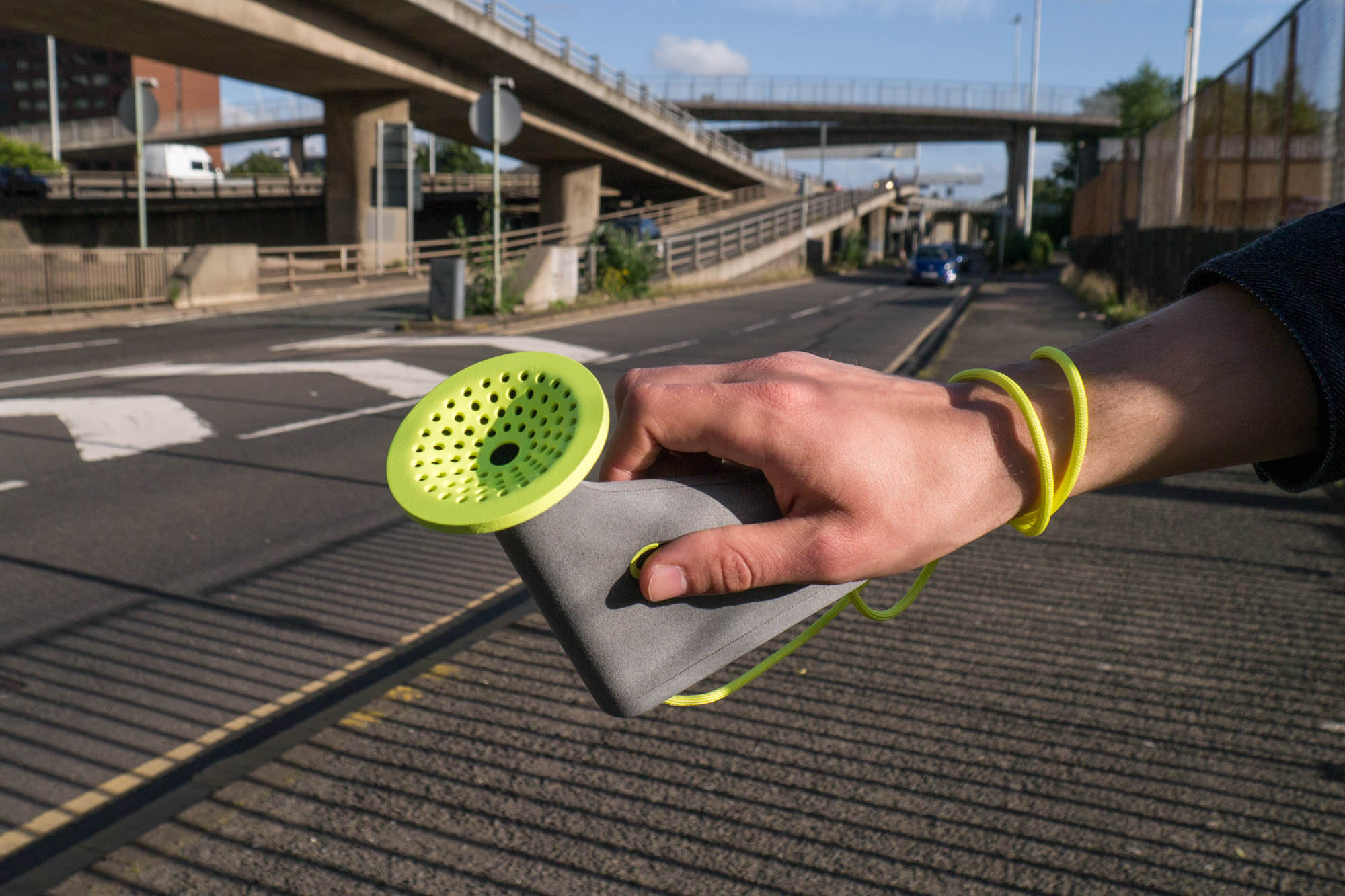
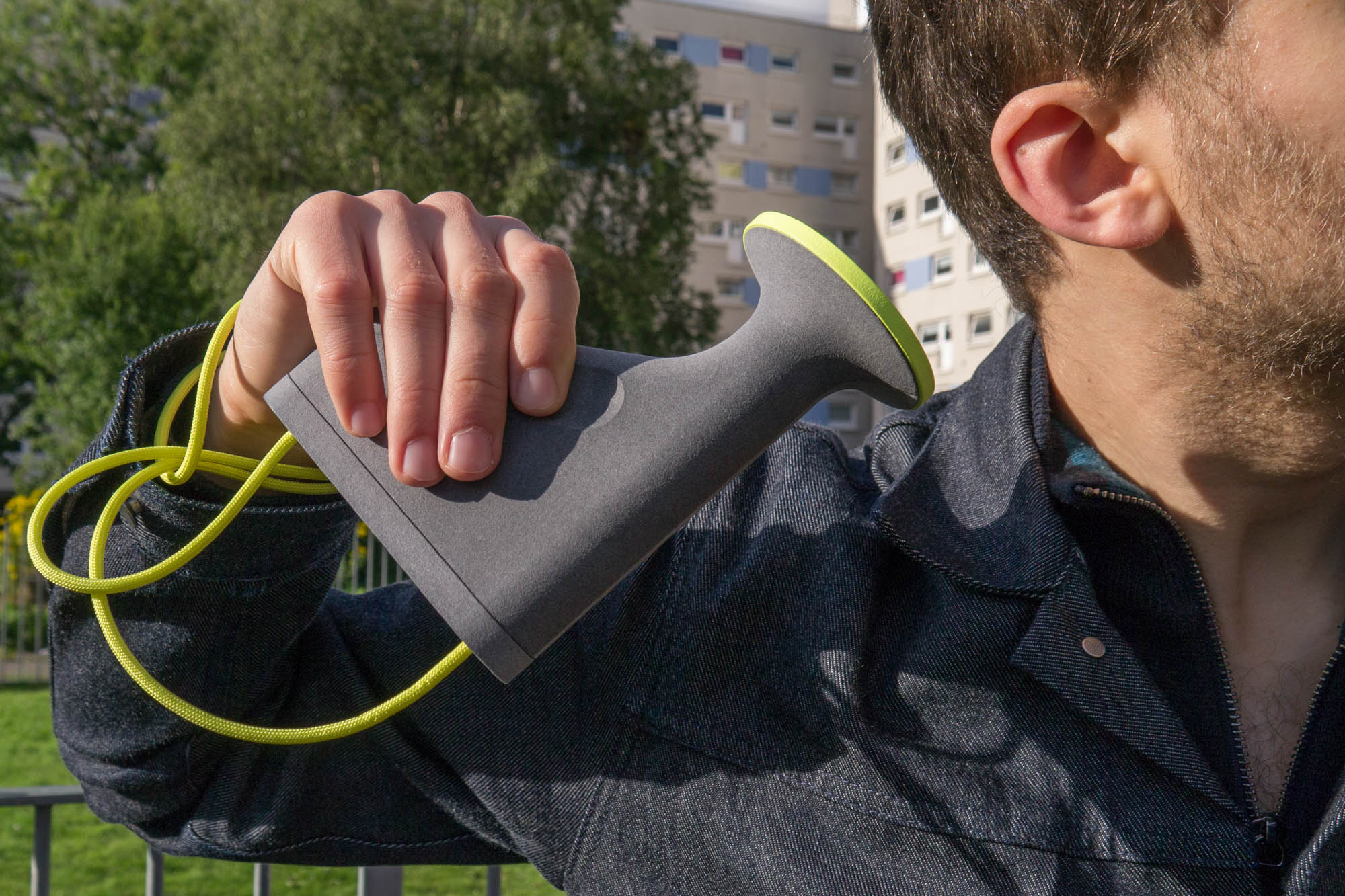


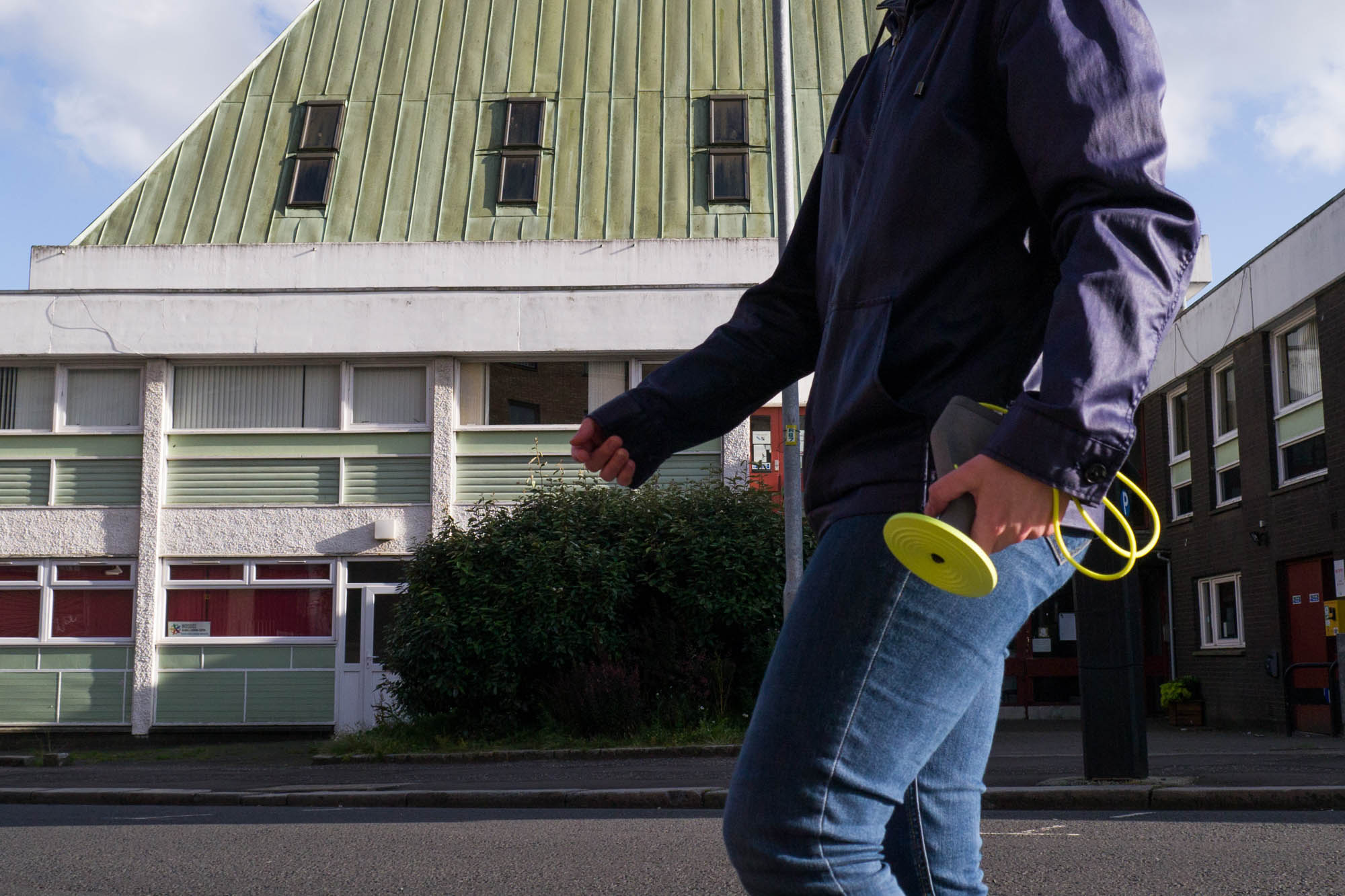
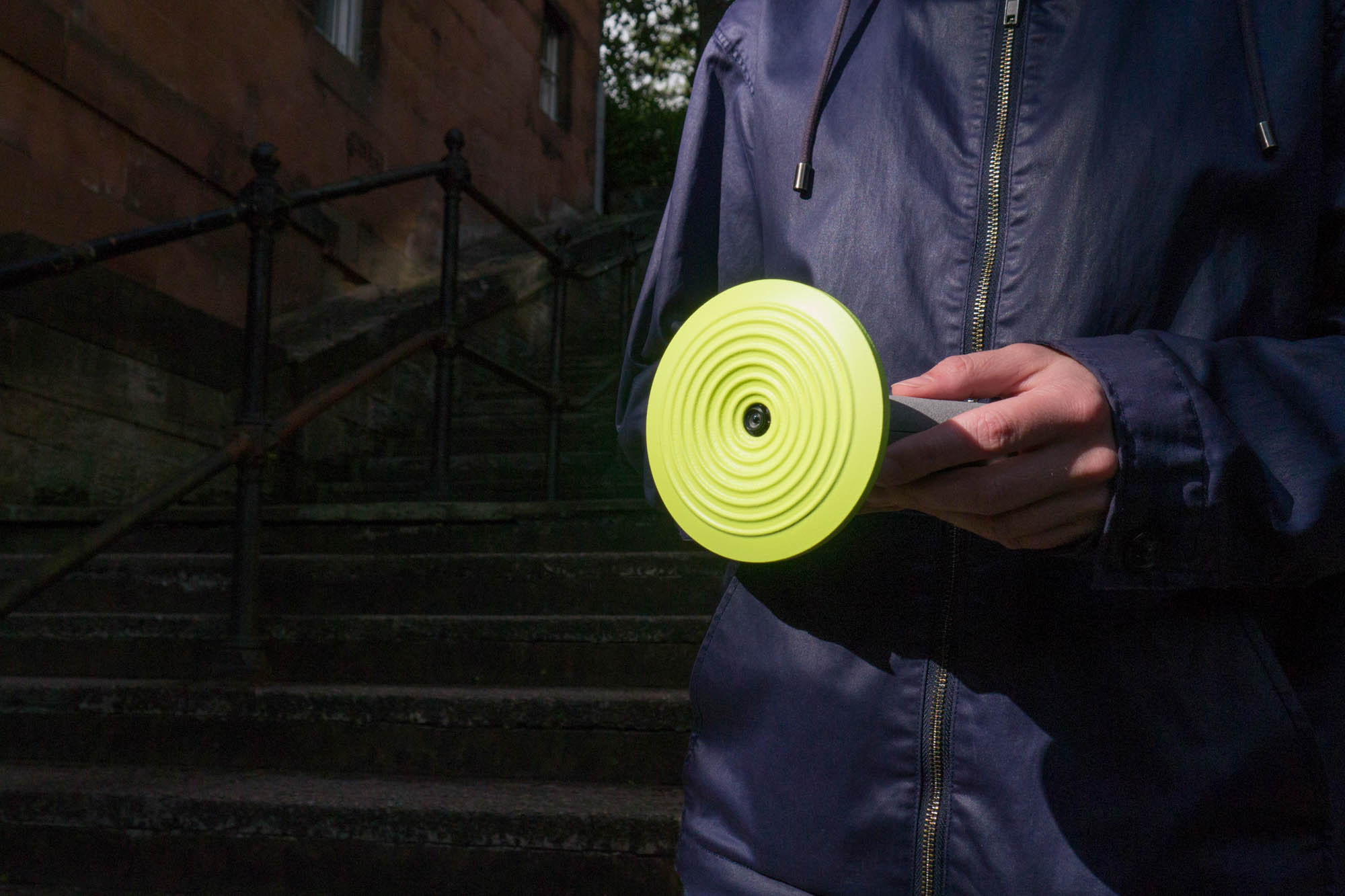
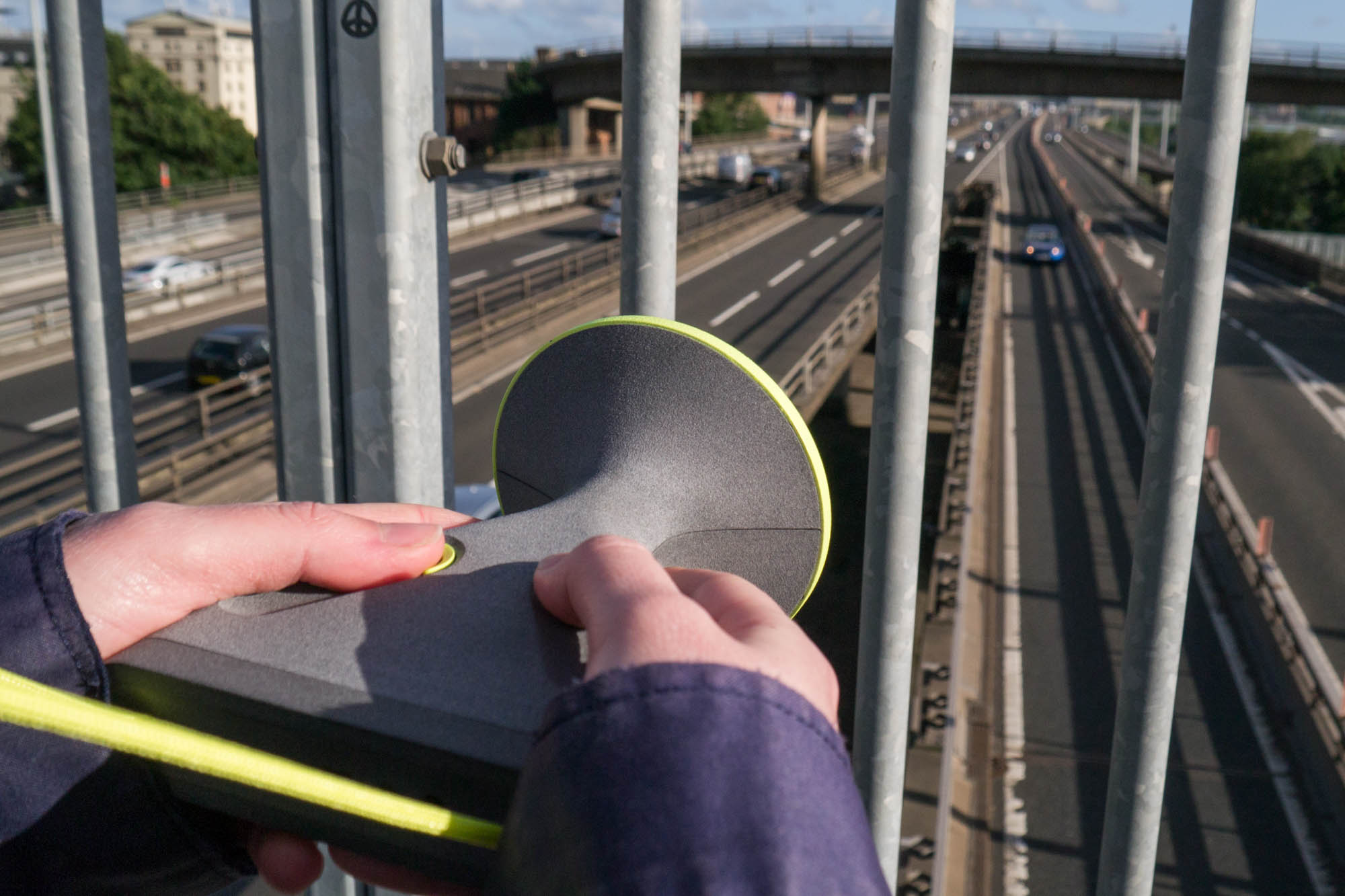
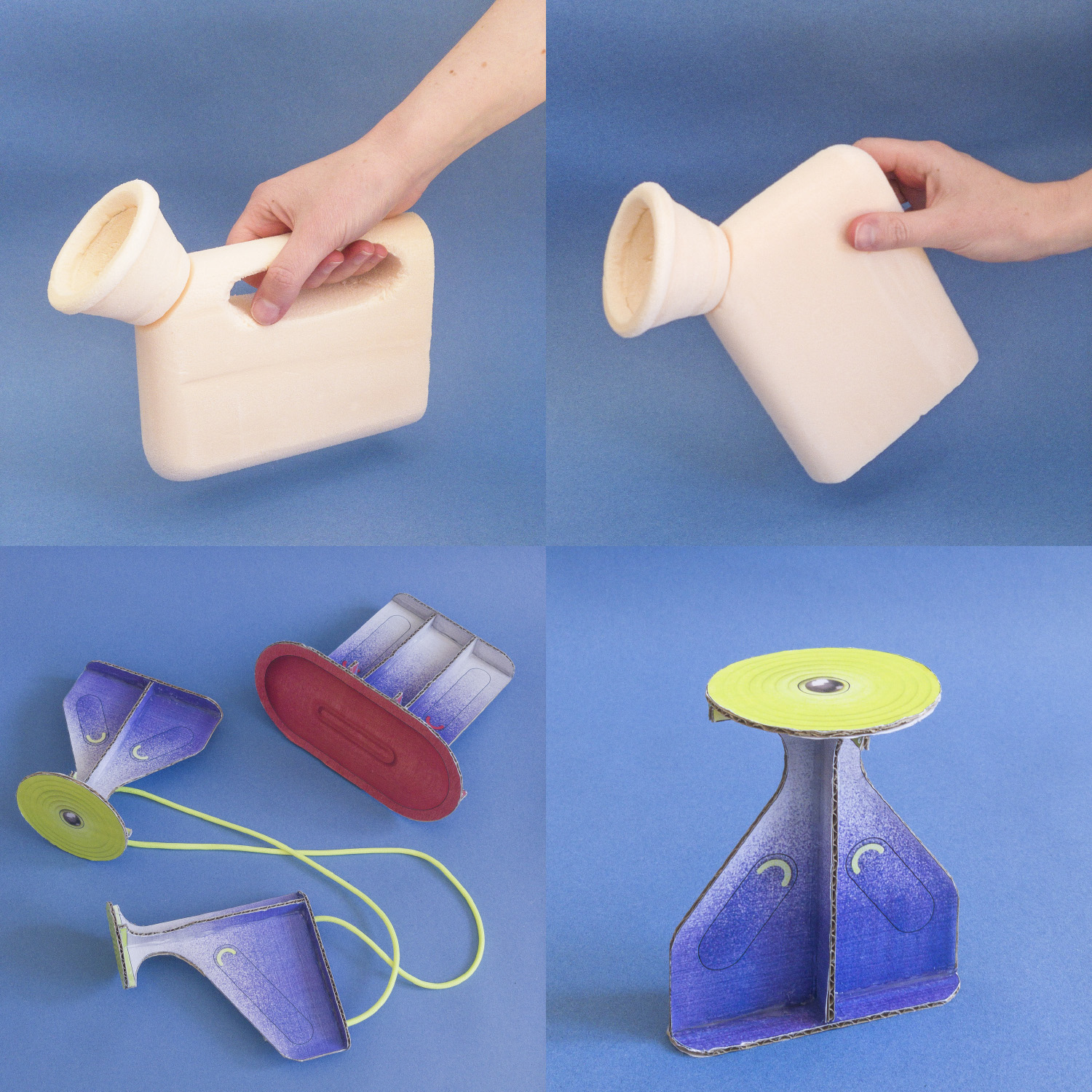
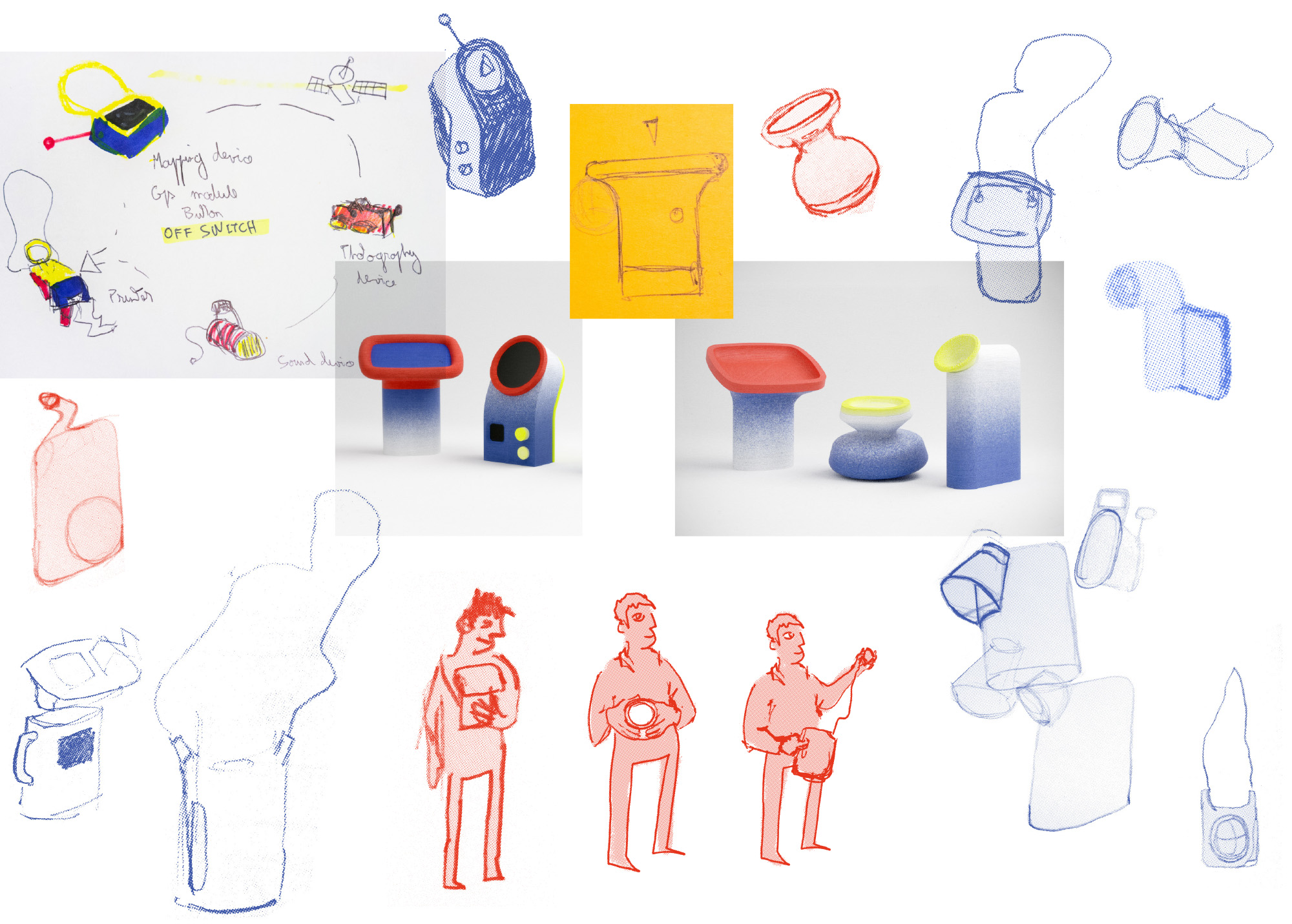
There are three data poets:
-The aesthete likes to admire ordinary landscapes. It is filled with images.
-The bard likes to listen to the music of the city. It is filled with sounds.
-These experiences are then poured into the Fountain printer, which will print the experiences as poems on paper, a tangible record.
The data collected helps people paint a more sensitive representation of a local area through Play. The project invites participants to re-appropriate places and give them new meaning poetically.
The data poets can be used during cultural events for tourists to keep a meaningful memory of their visit.
They can also be used locally for consultation, to reveal overlooked perspectives of an area. The resulting experiences can be celebrated through exhibitions or publications.
The Data Poets bring a poetic approach to Citizen Science (data-collecting by ordinary people). Instead of exploring data for scientific reasons, what happens if we have fun with it?
-The aesthete likes to admire ordinary landscapes. It is filled with images.
-The bard likes to listen to the music of the city. It is filled with sounds.
-These experiences are then poured into the Fountain printer, which will print the experiences as poems on paper, a tangible record.
The data collected helps people paint a more sensitive representation of a local area through Play. The project invites participants to re-appropriate places and give them new meaning poetically.
The data poets can be used during cultural events for tourists to keep a meaningful memory of their visit.
They can also be used locally for consultation, to reveal overlooked perspectives of an area. The resulting experiences can be celebrated through exhibitions or publications.
The Data Poets bring a poetic approach to Citizen Science (data-collecting by ordinary people). Instead of exploring data for scientific reasons, what happens if we have fun with it?

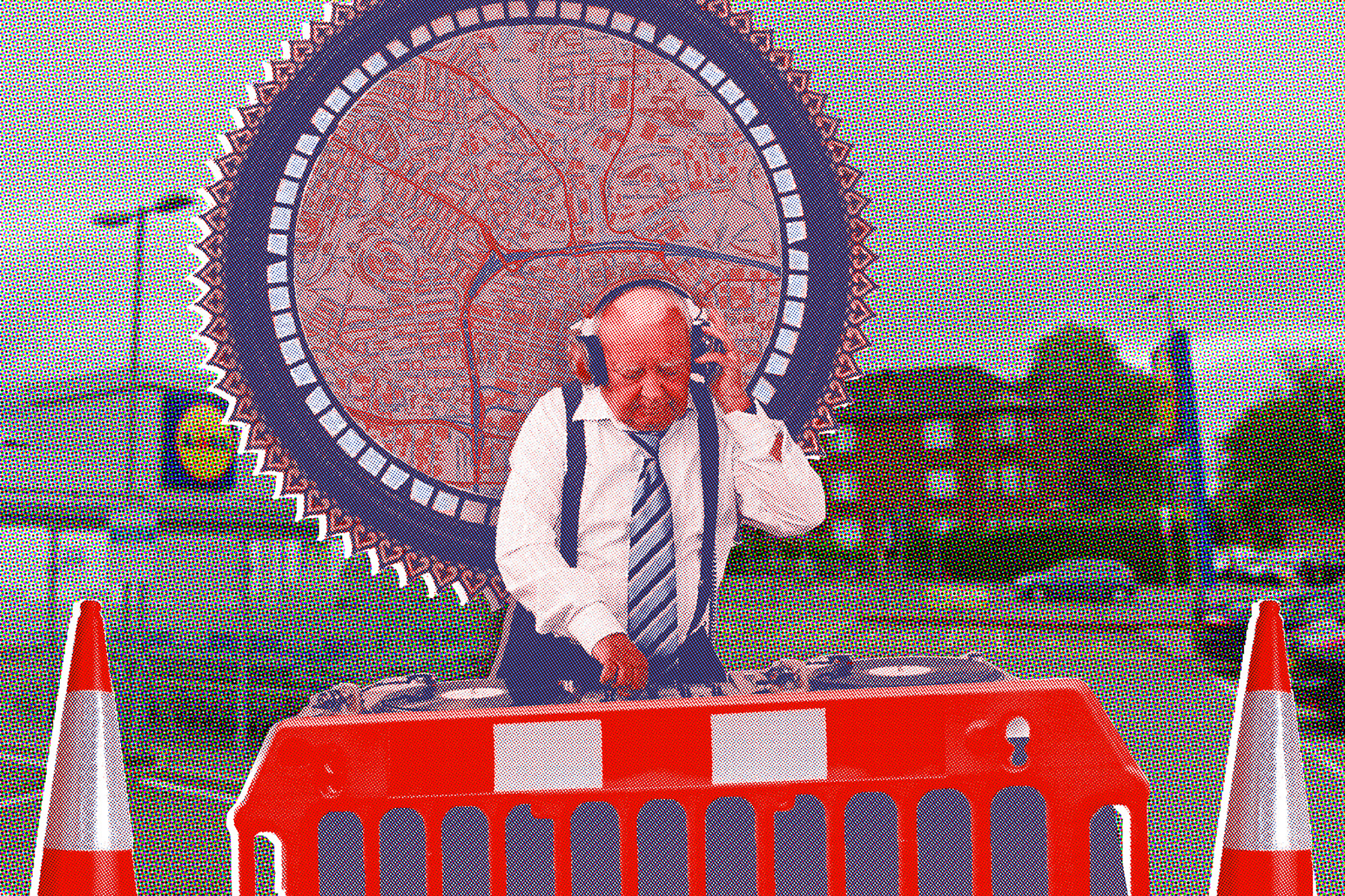
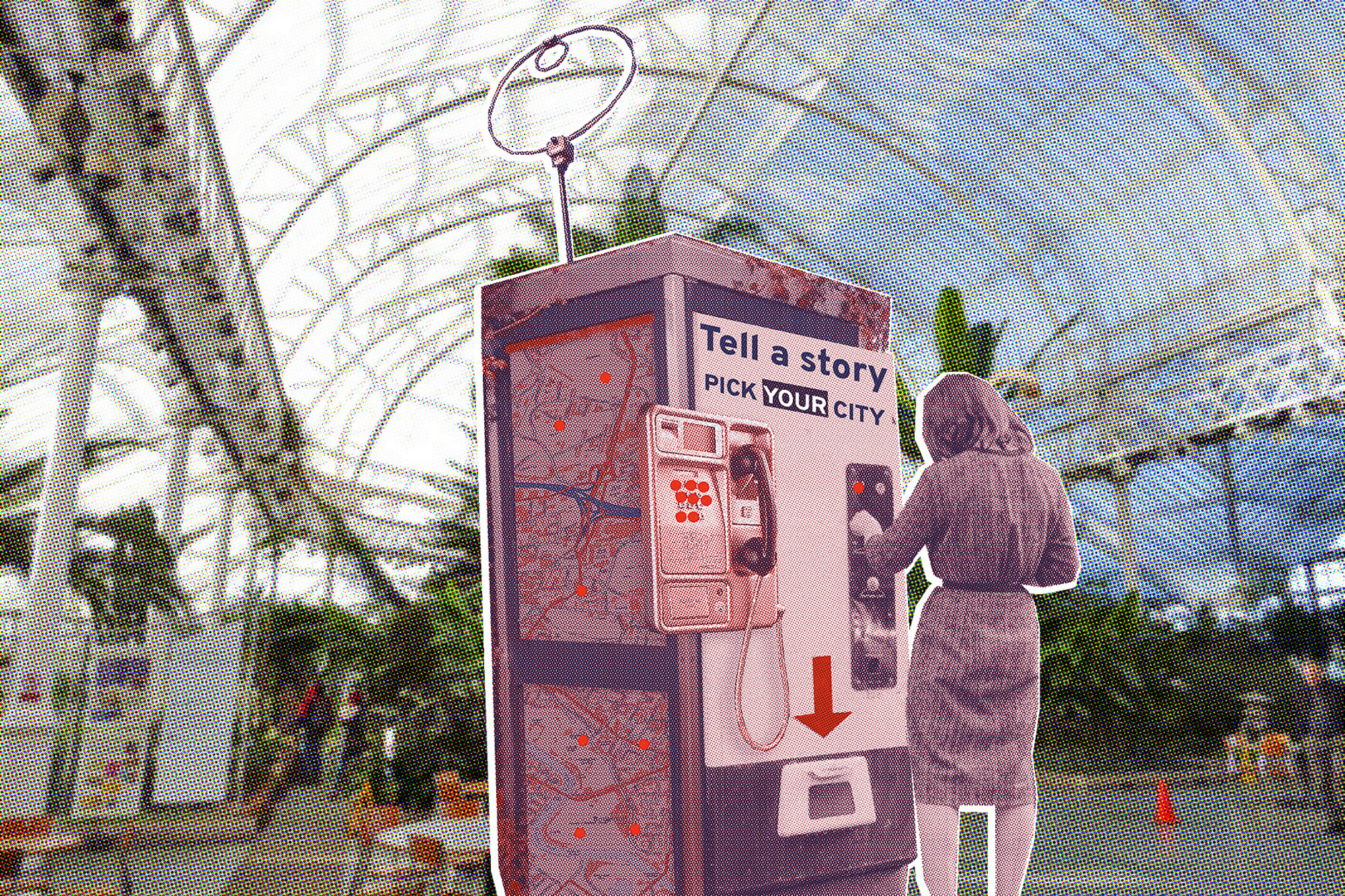
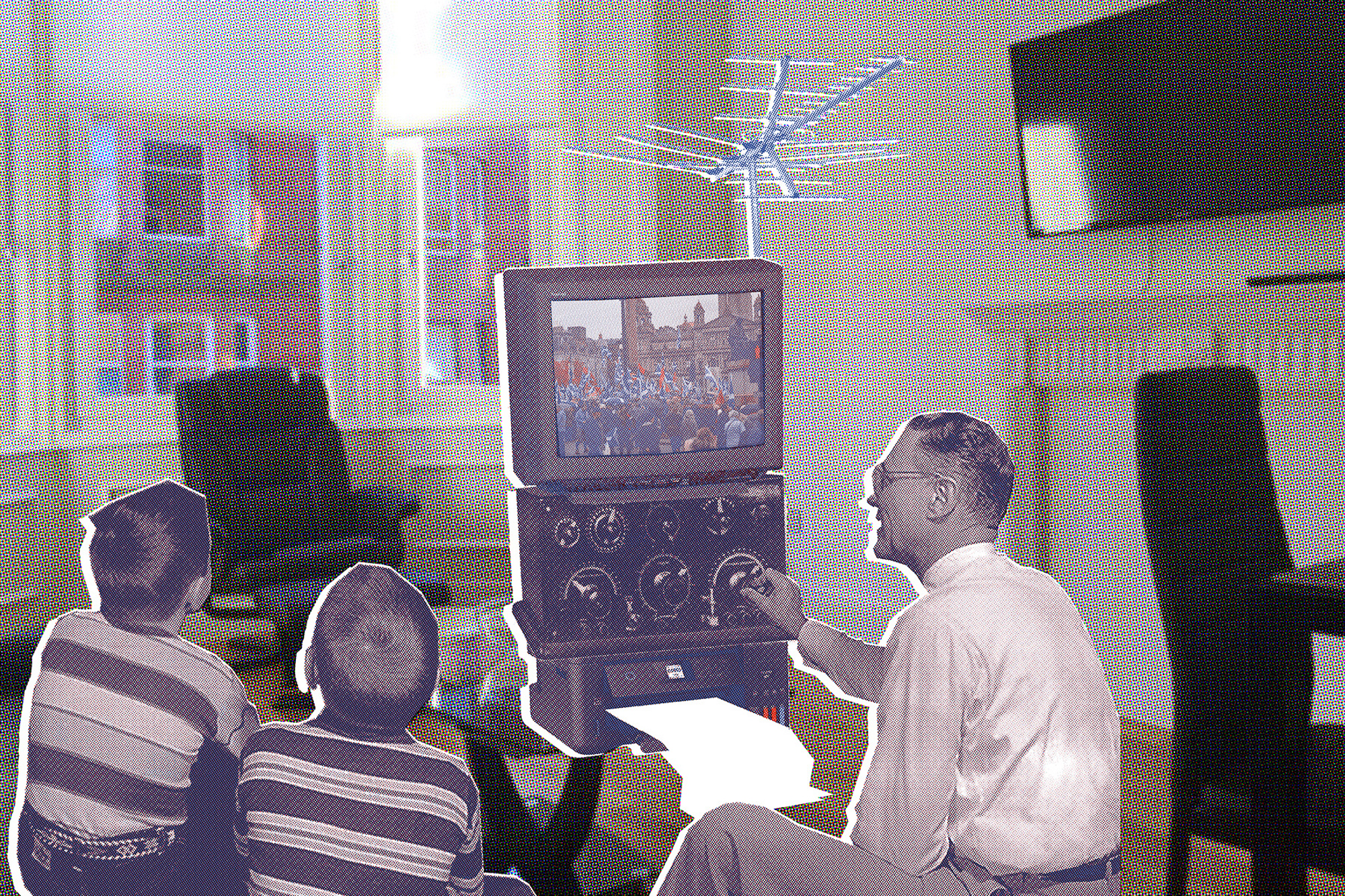
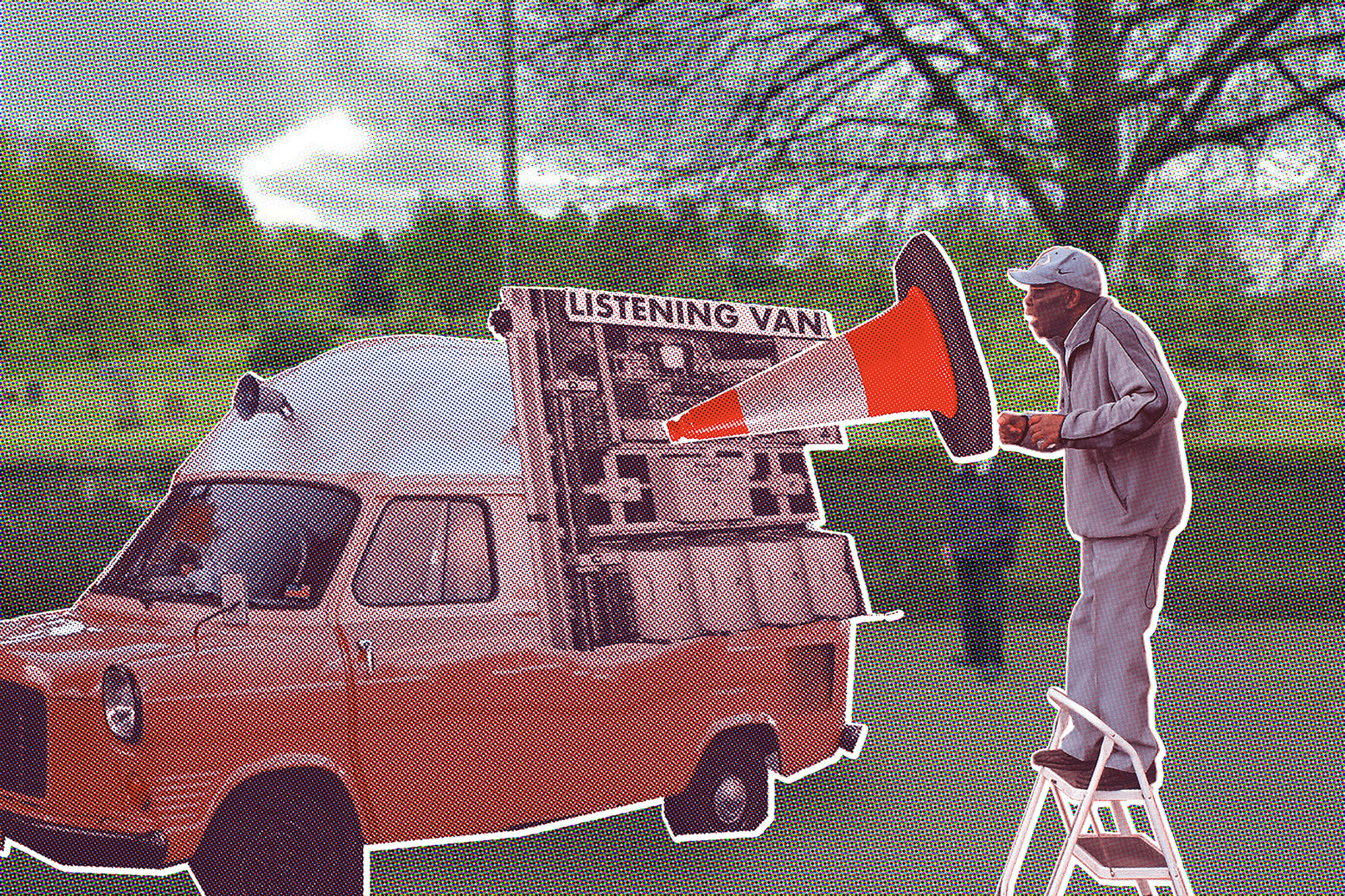
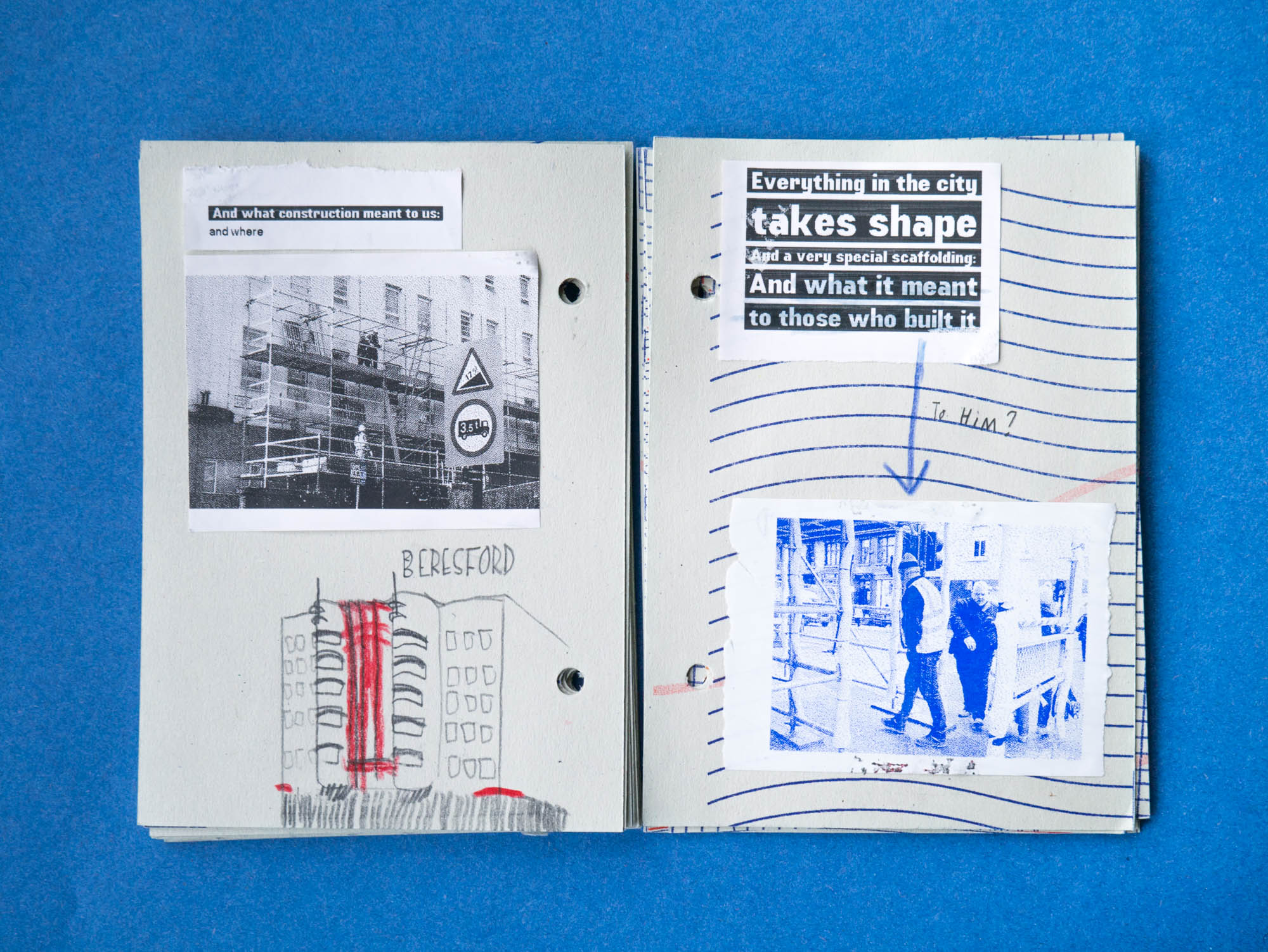

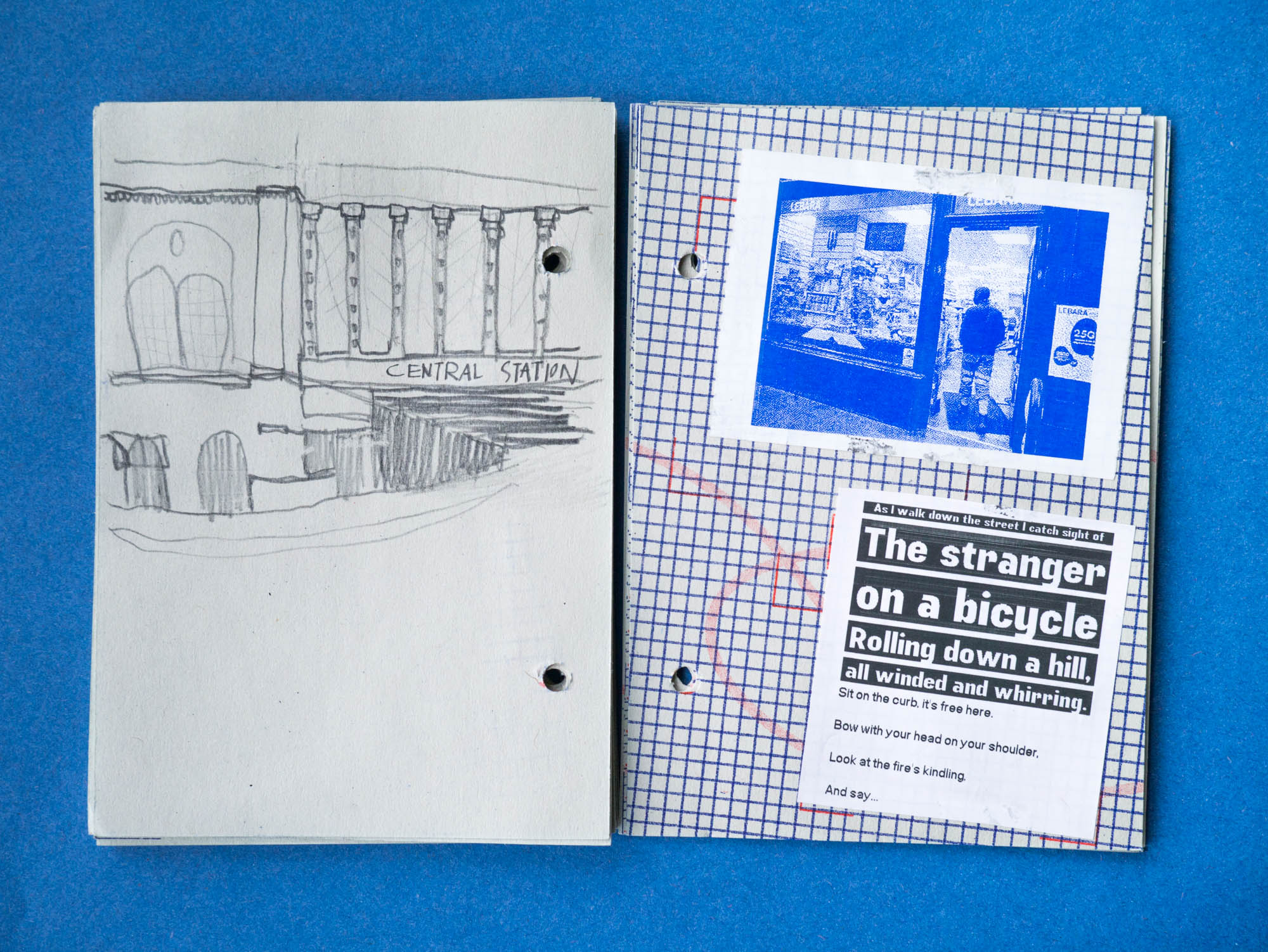
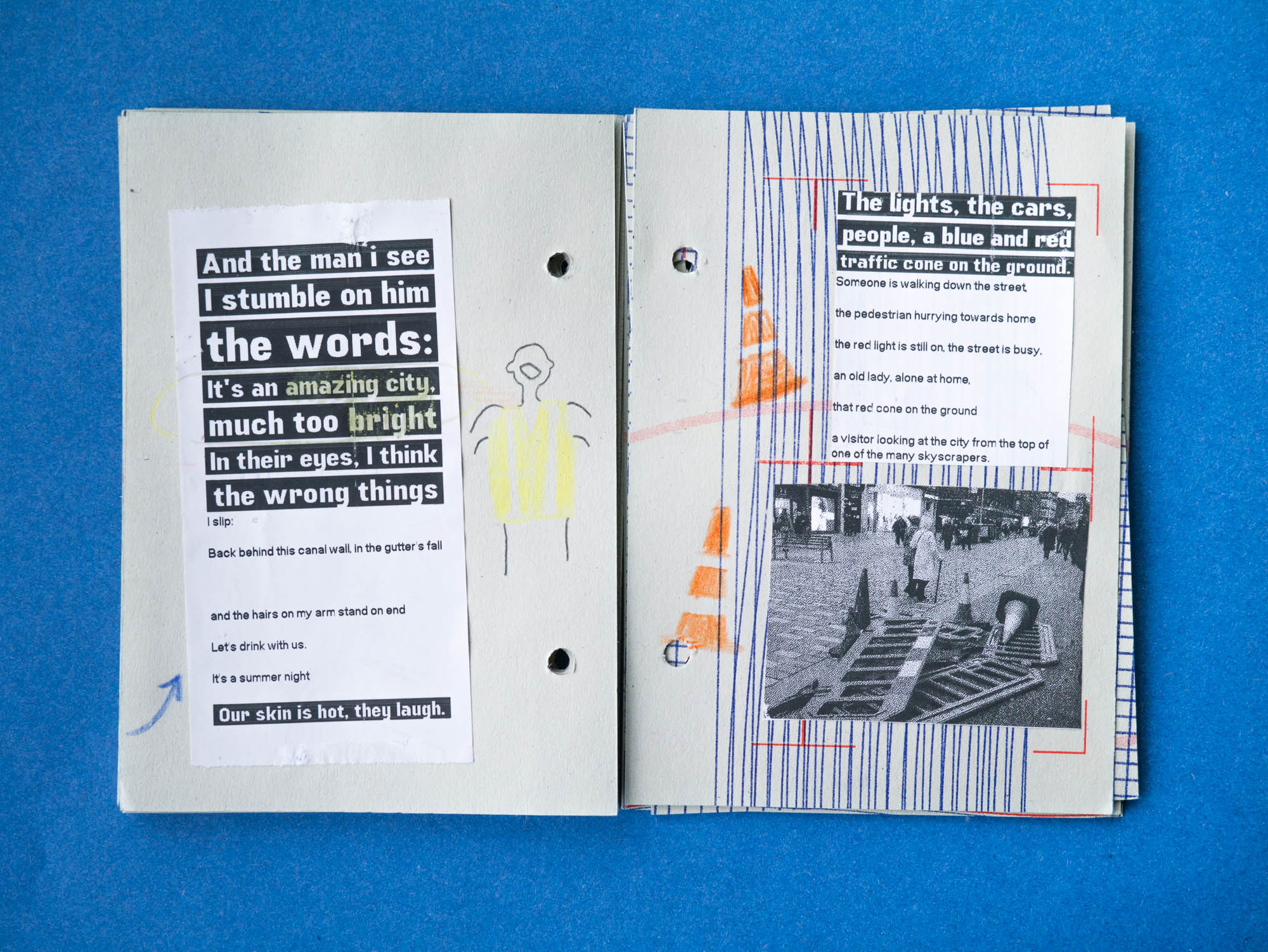
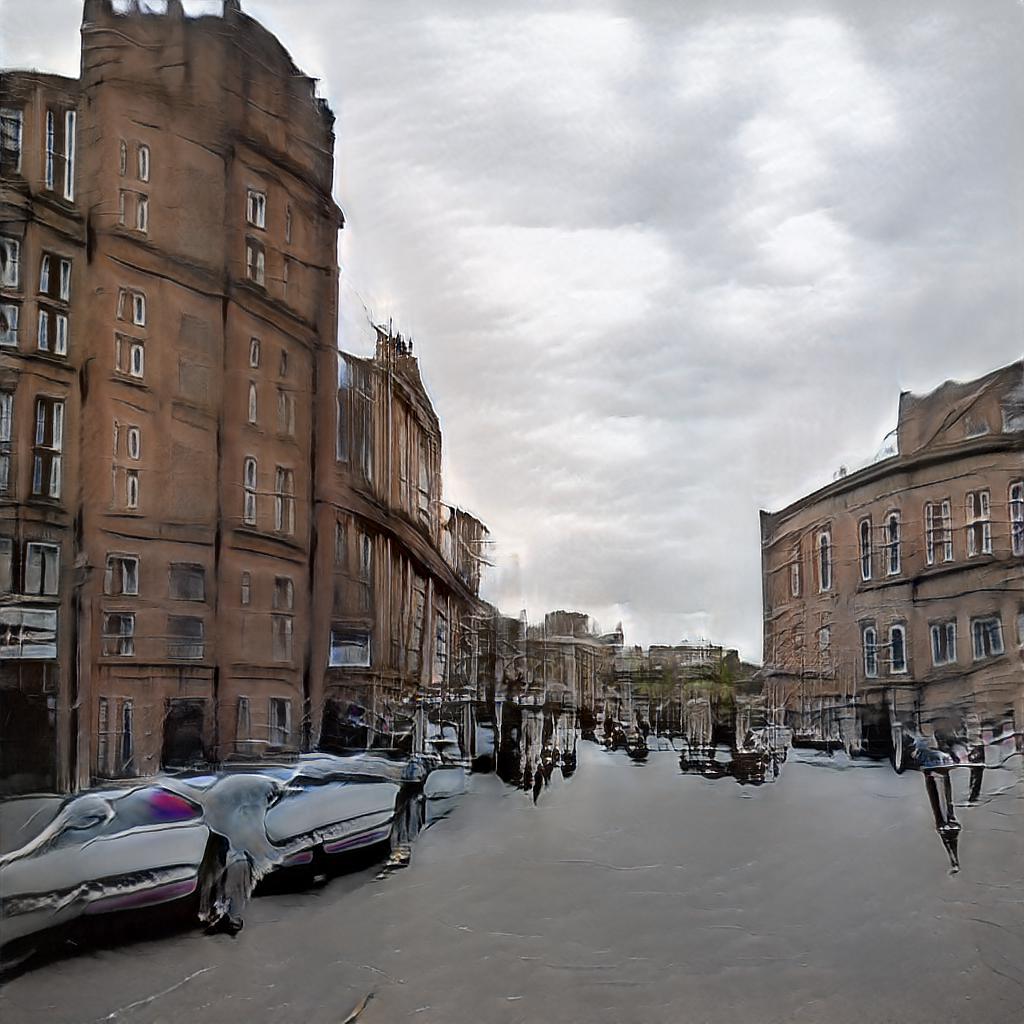
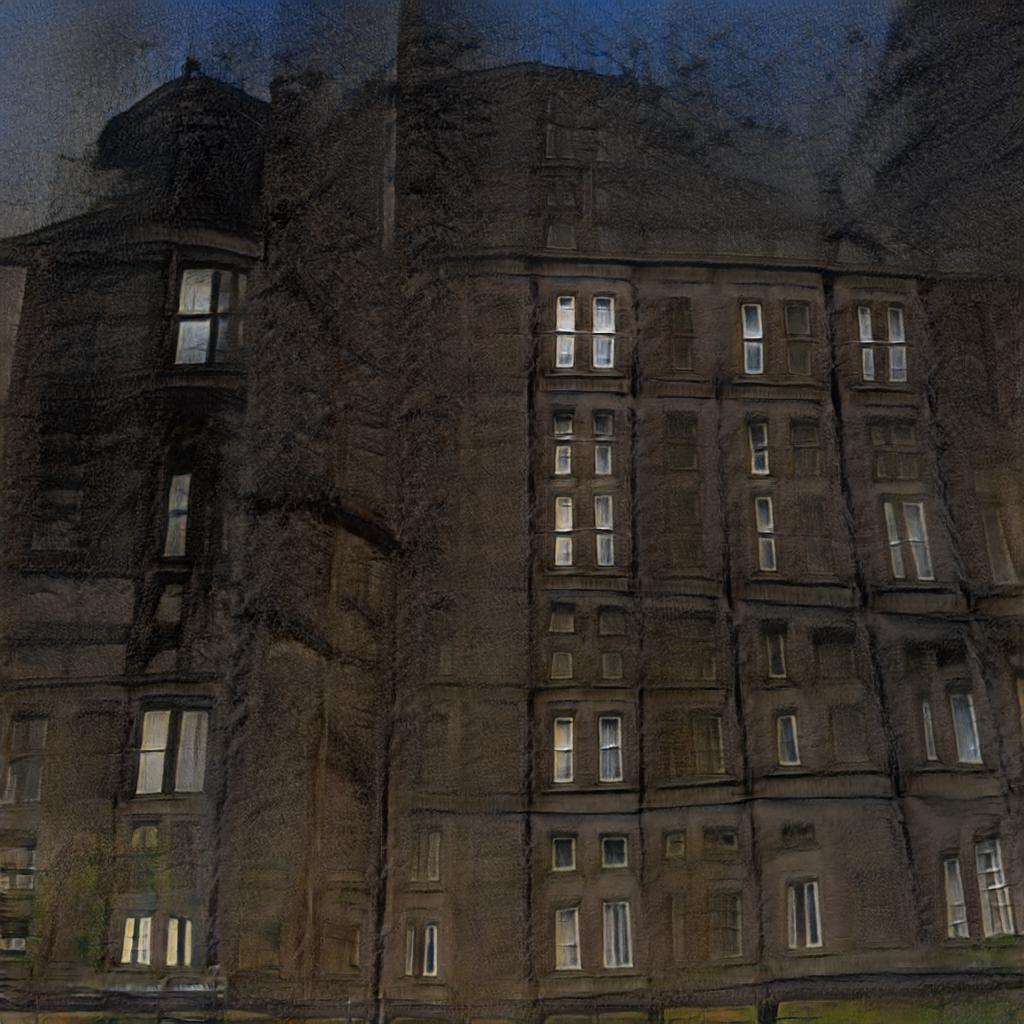
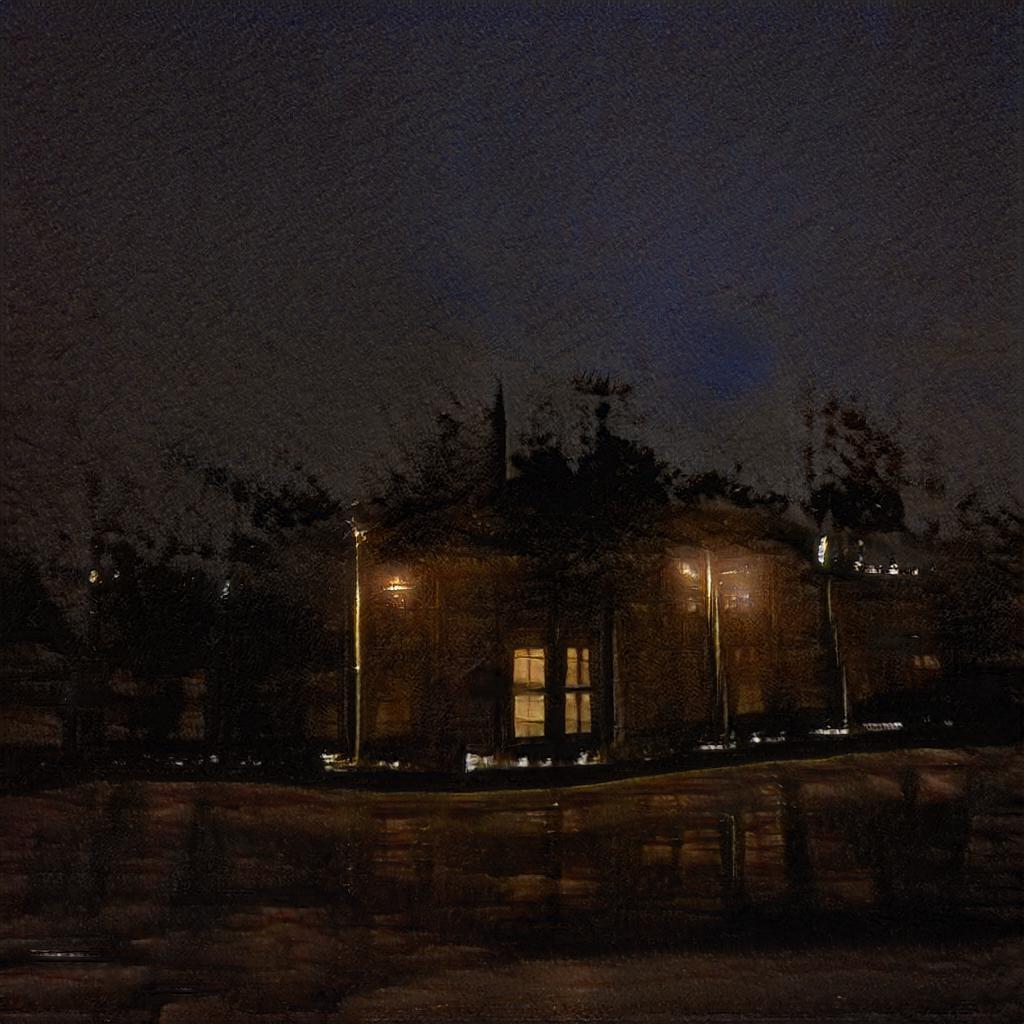
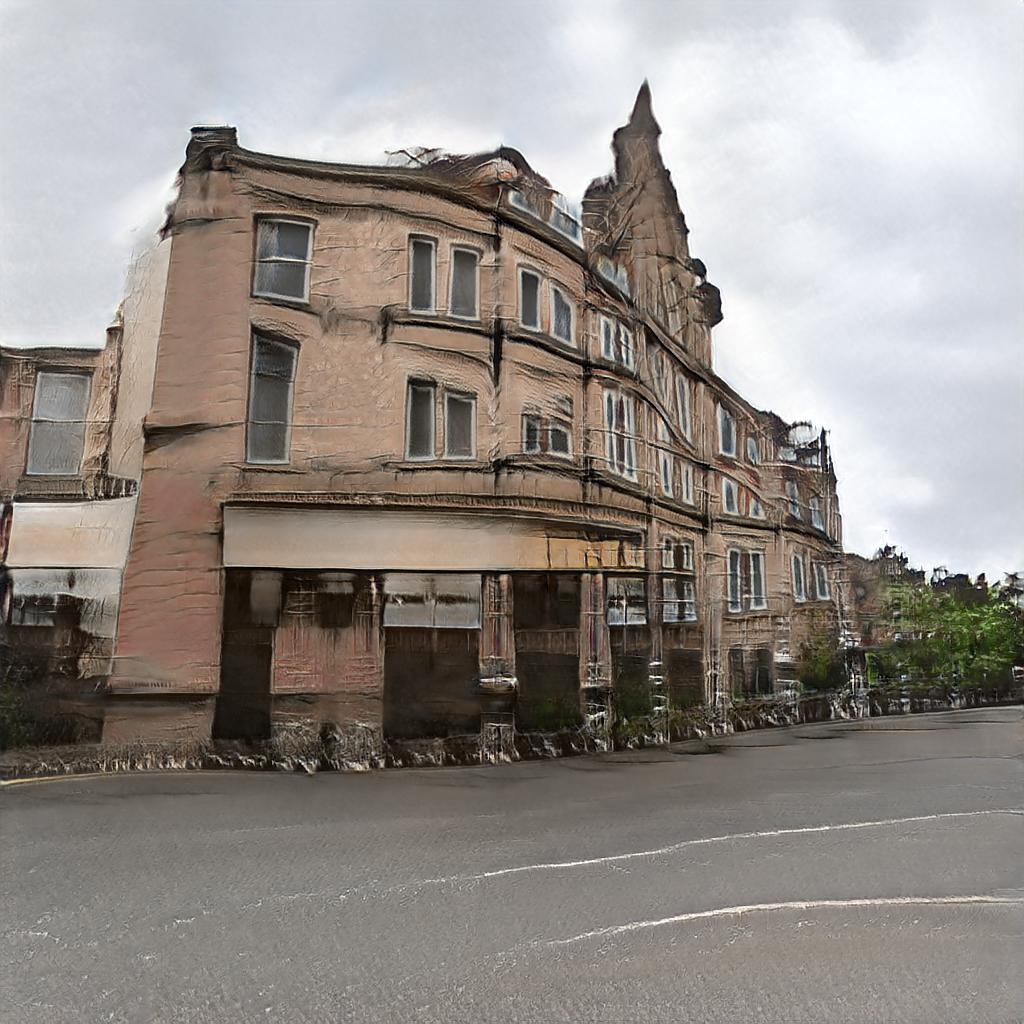
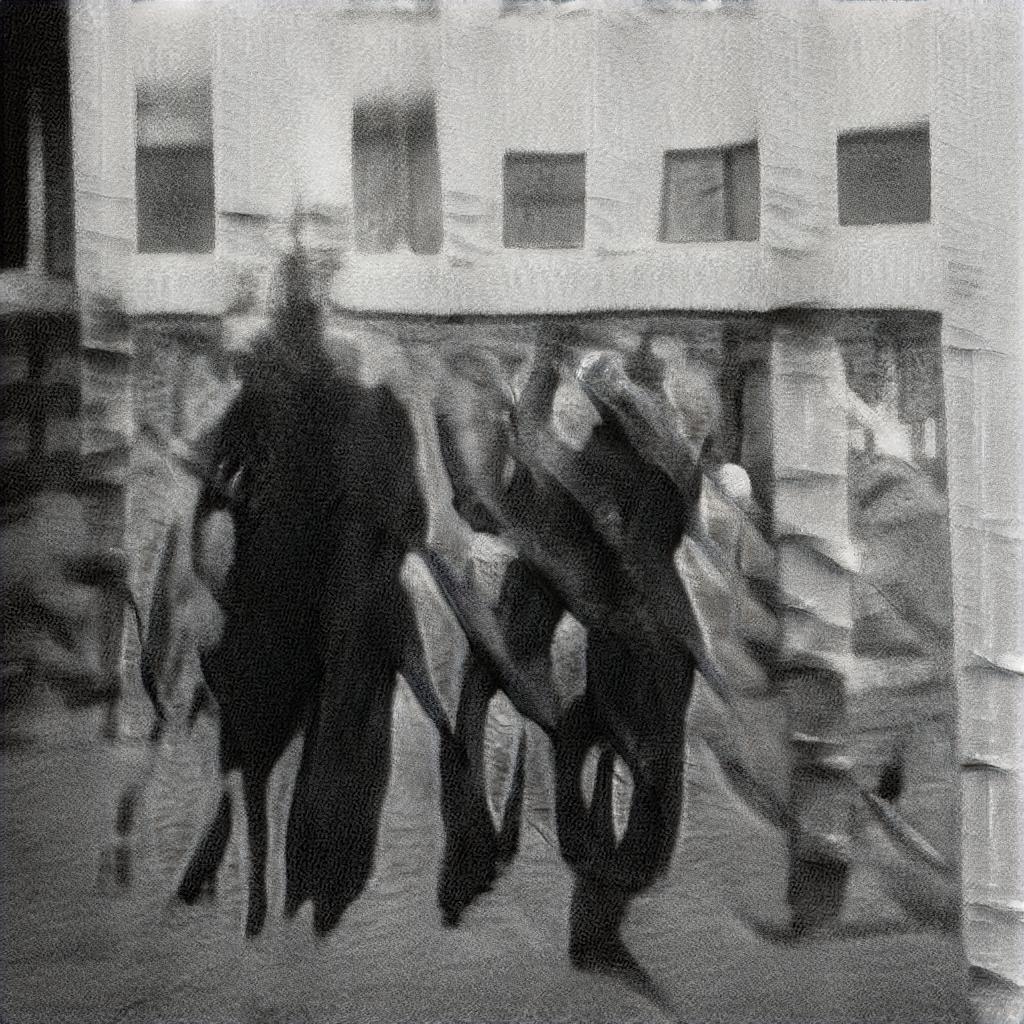
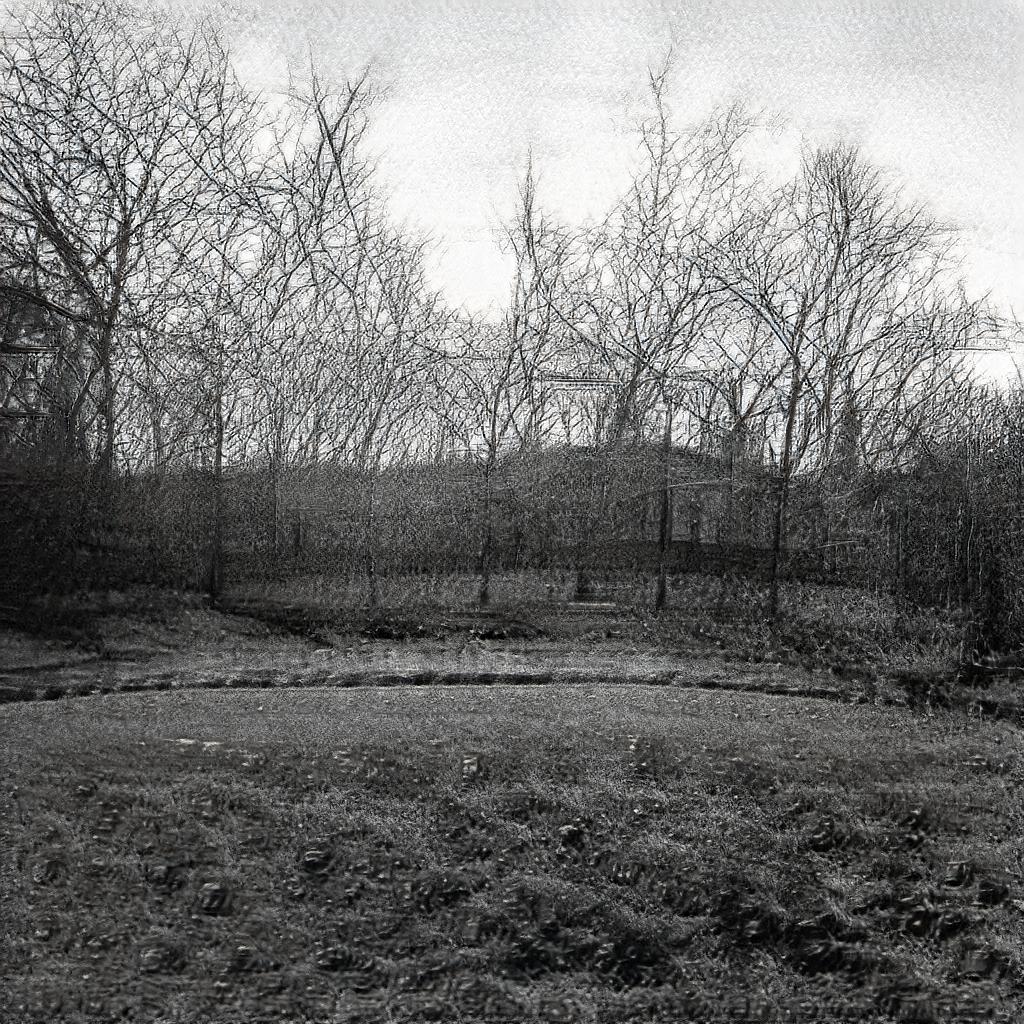
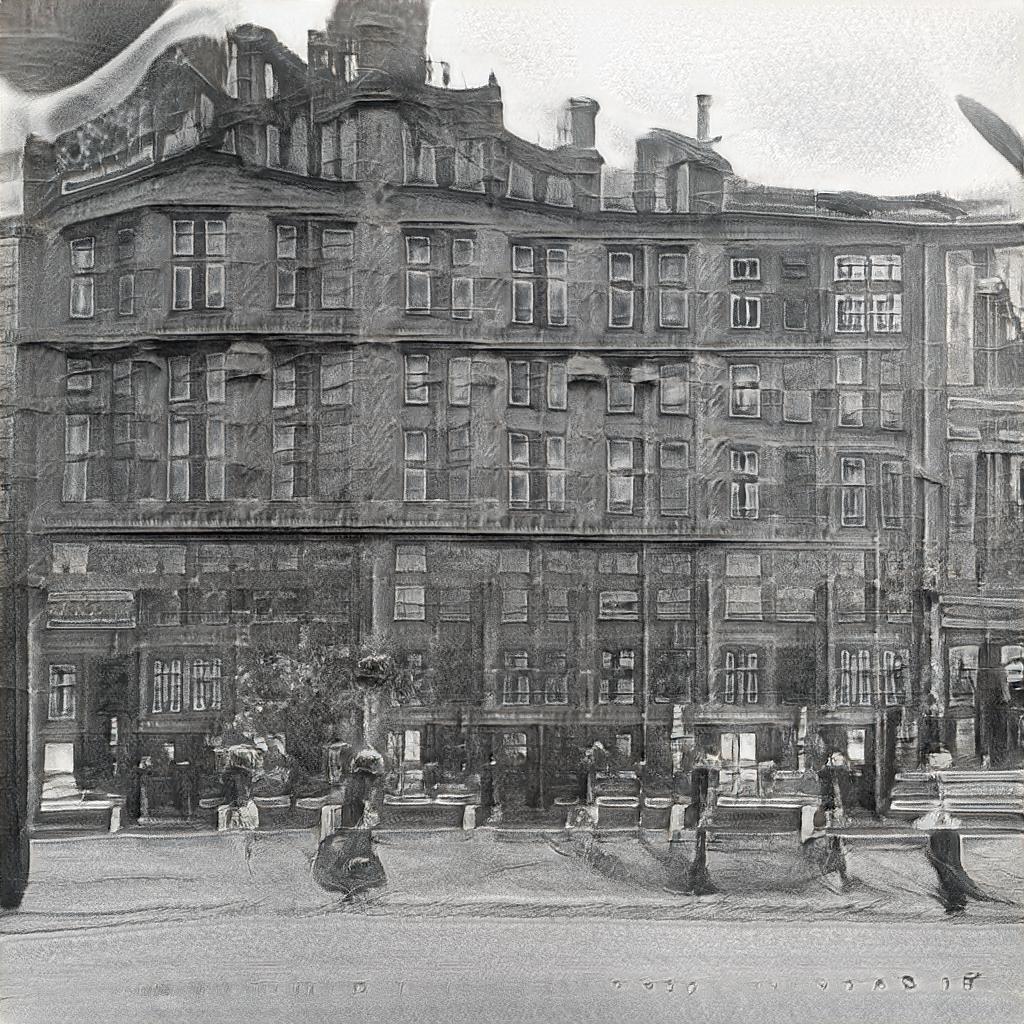
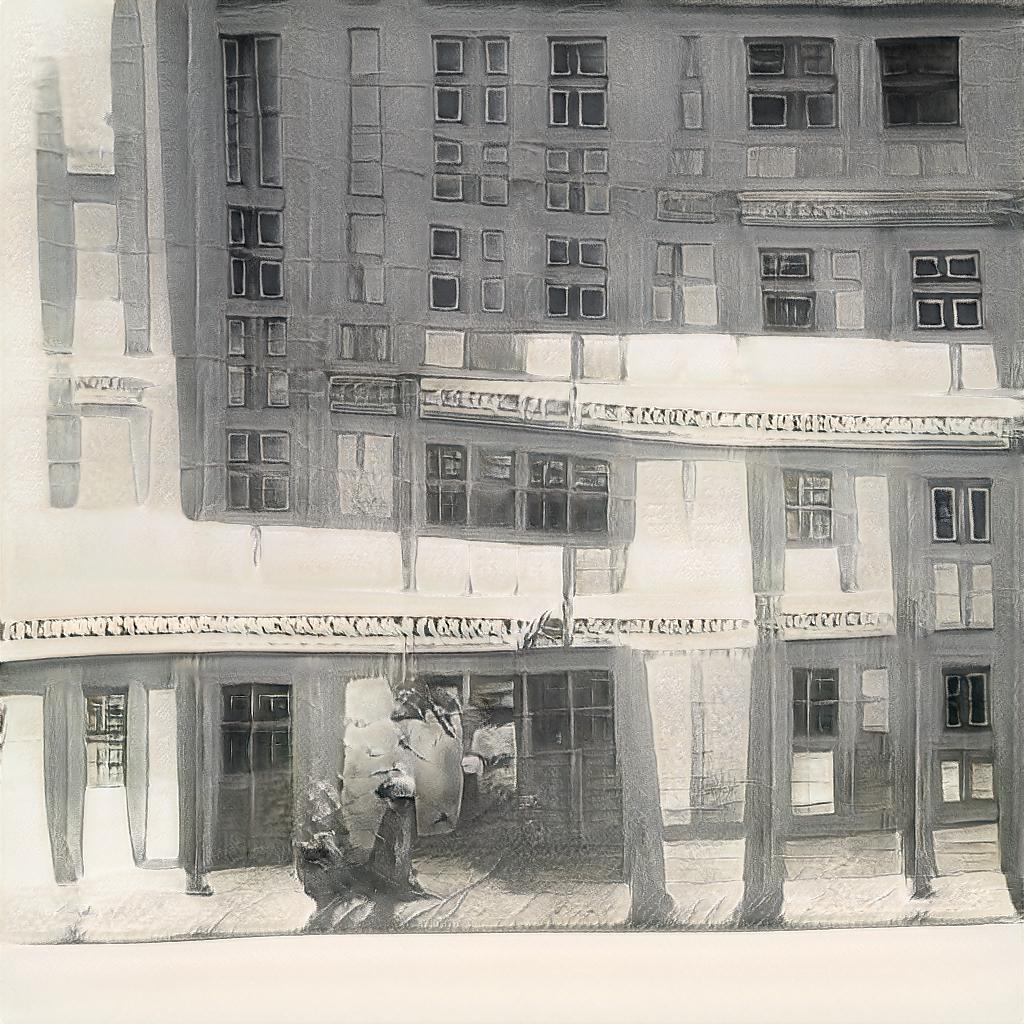
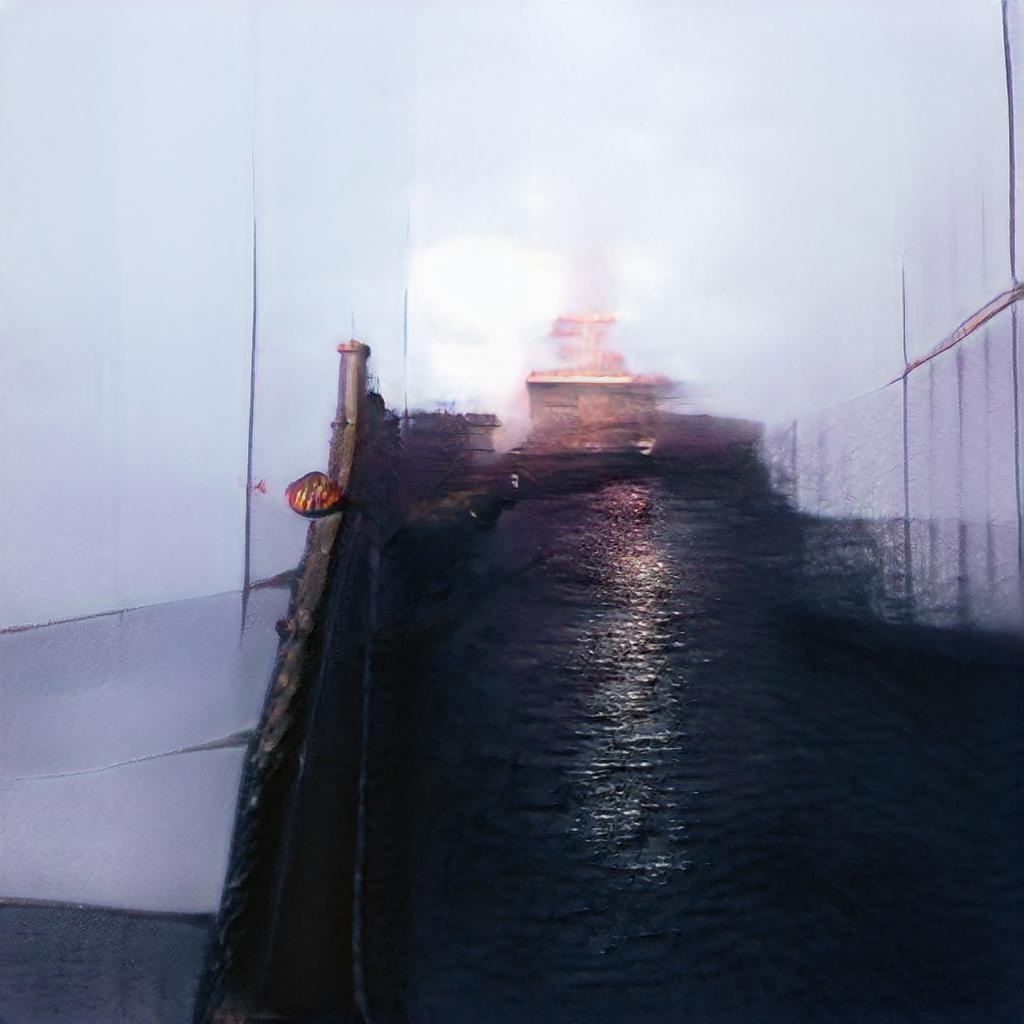
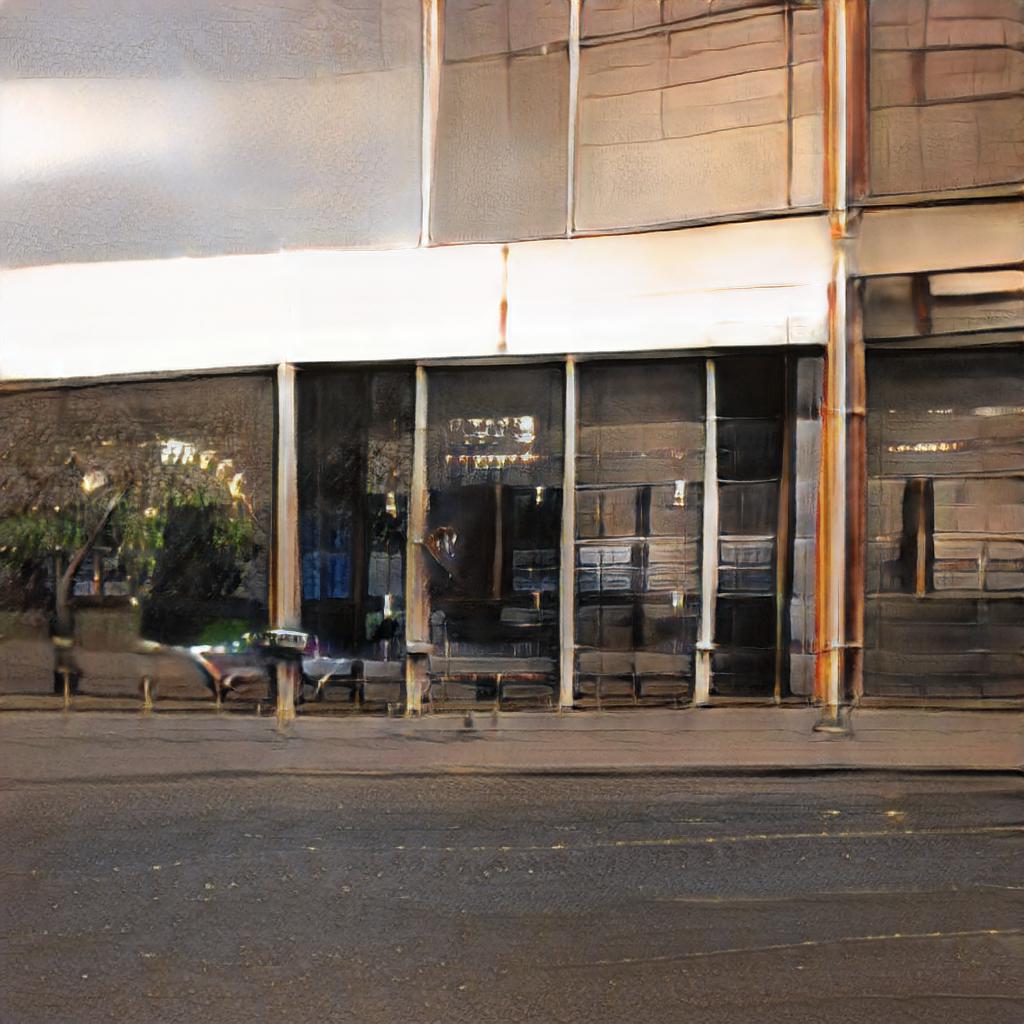
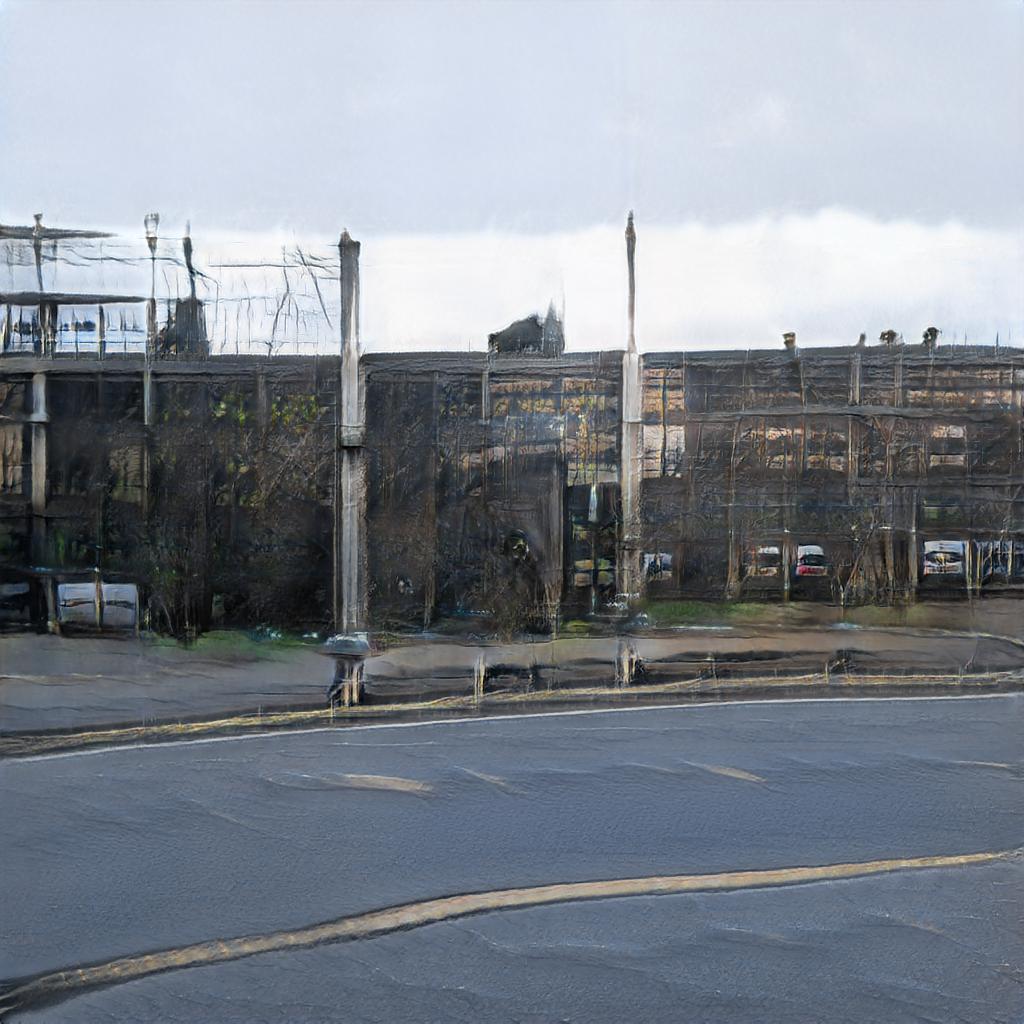
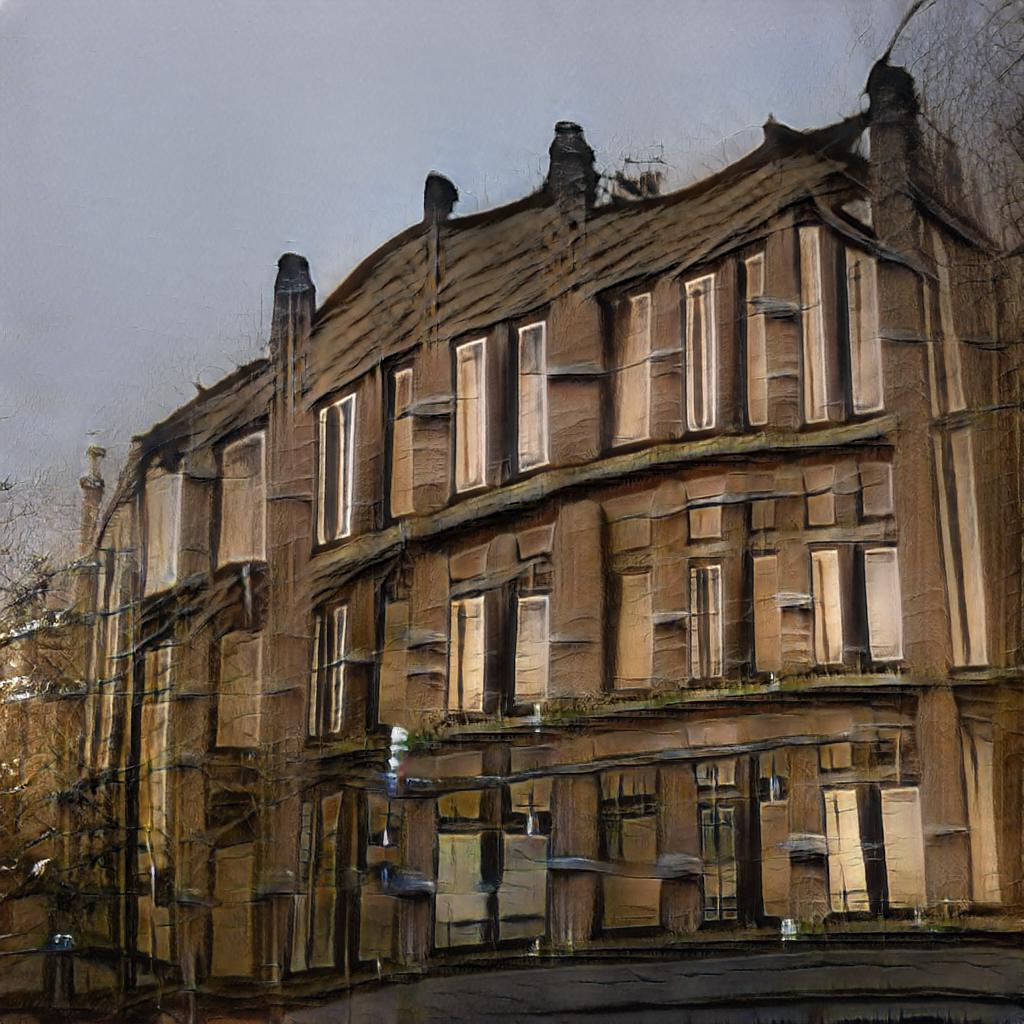
This is how the Data Poets see the world. After seeing more than a thousand images, they start having dreams of Glasgow ... and this is what they imagine. The dataset originates from my observation and walks in Glasgow, supplemented by archive imagery.

BIRD - Webcam Augury
︎︎︎BIRD - Webcam Augury (2024)
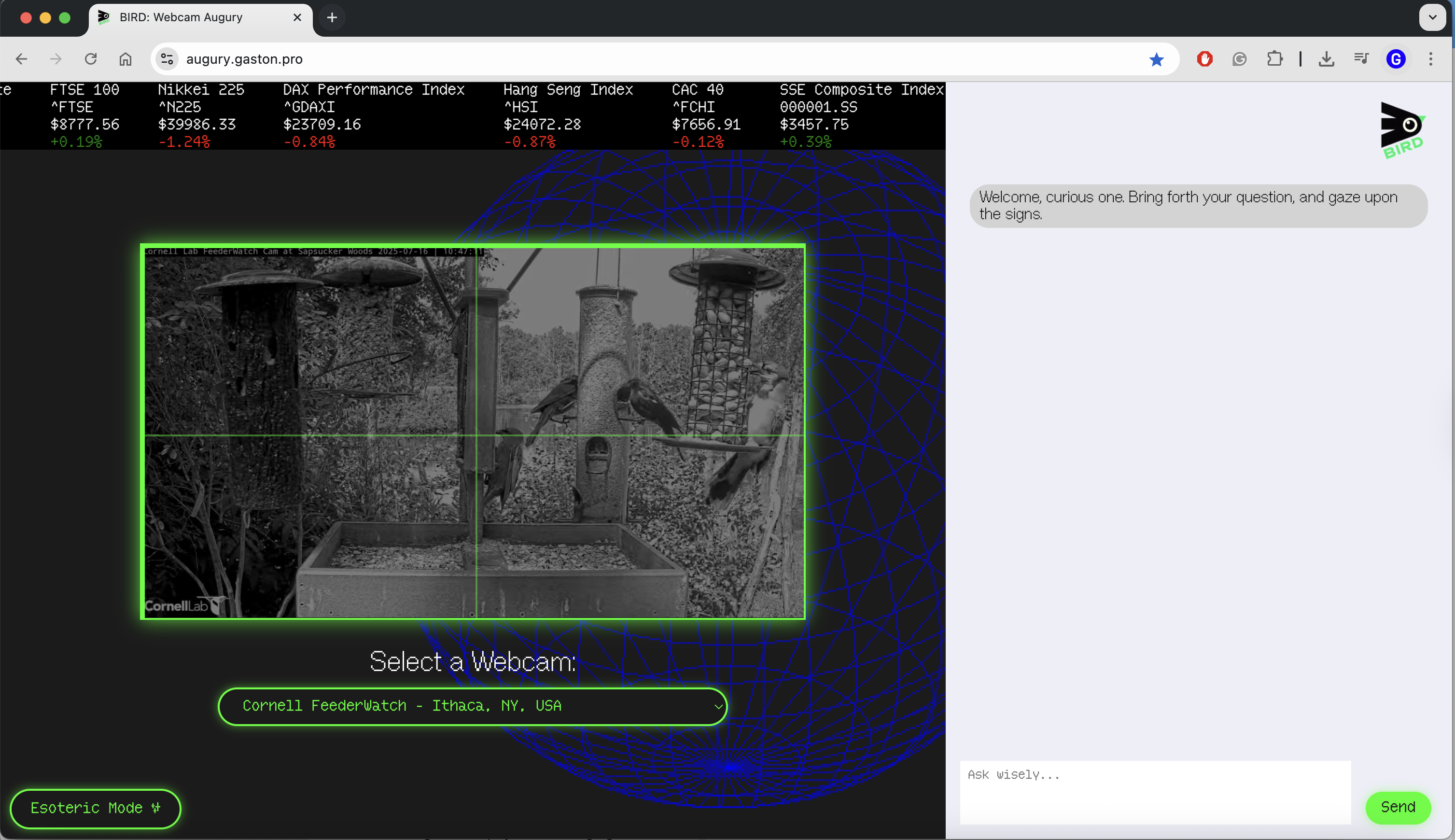
BIRD (Bird Informed Remote Divination) is a collaborative, chat-based augury experience (divination through observation of birds and sky). You are connected through webcams to birds across the world and are tasked to interpret the signs with an augur chatbot. Commissioned by (2024) and in collaboration with AIXDesign.
BIRD was exhibited at the Slow AI festival May 1-3 2025, in Amsterdam. At the Festival, I conducted a participatory Augury bird walk and performance.
BIRD augury walks were held with Elisava school of Design, and at Watershed in Bristol in 2026.


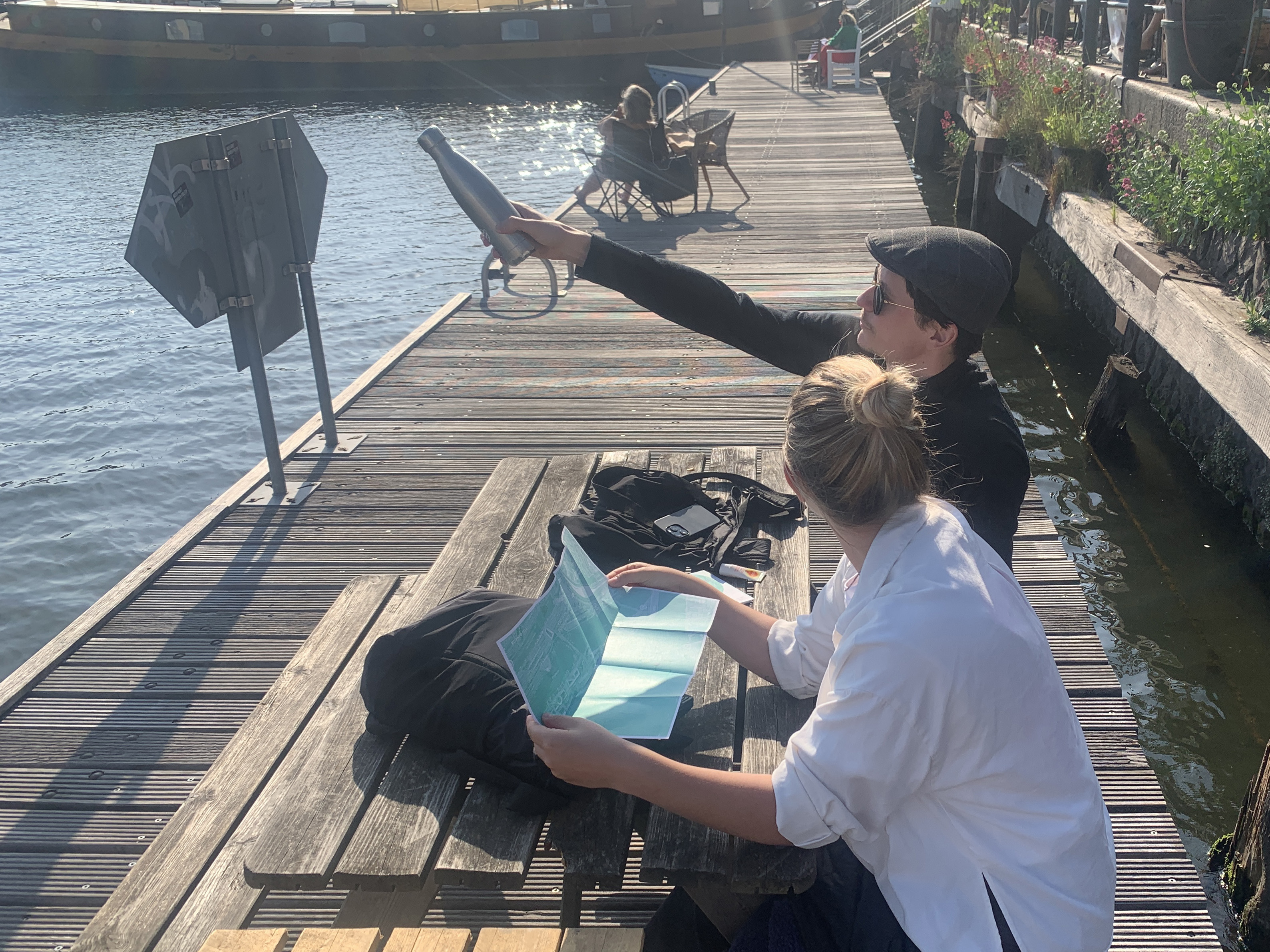


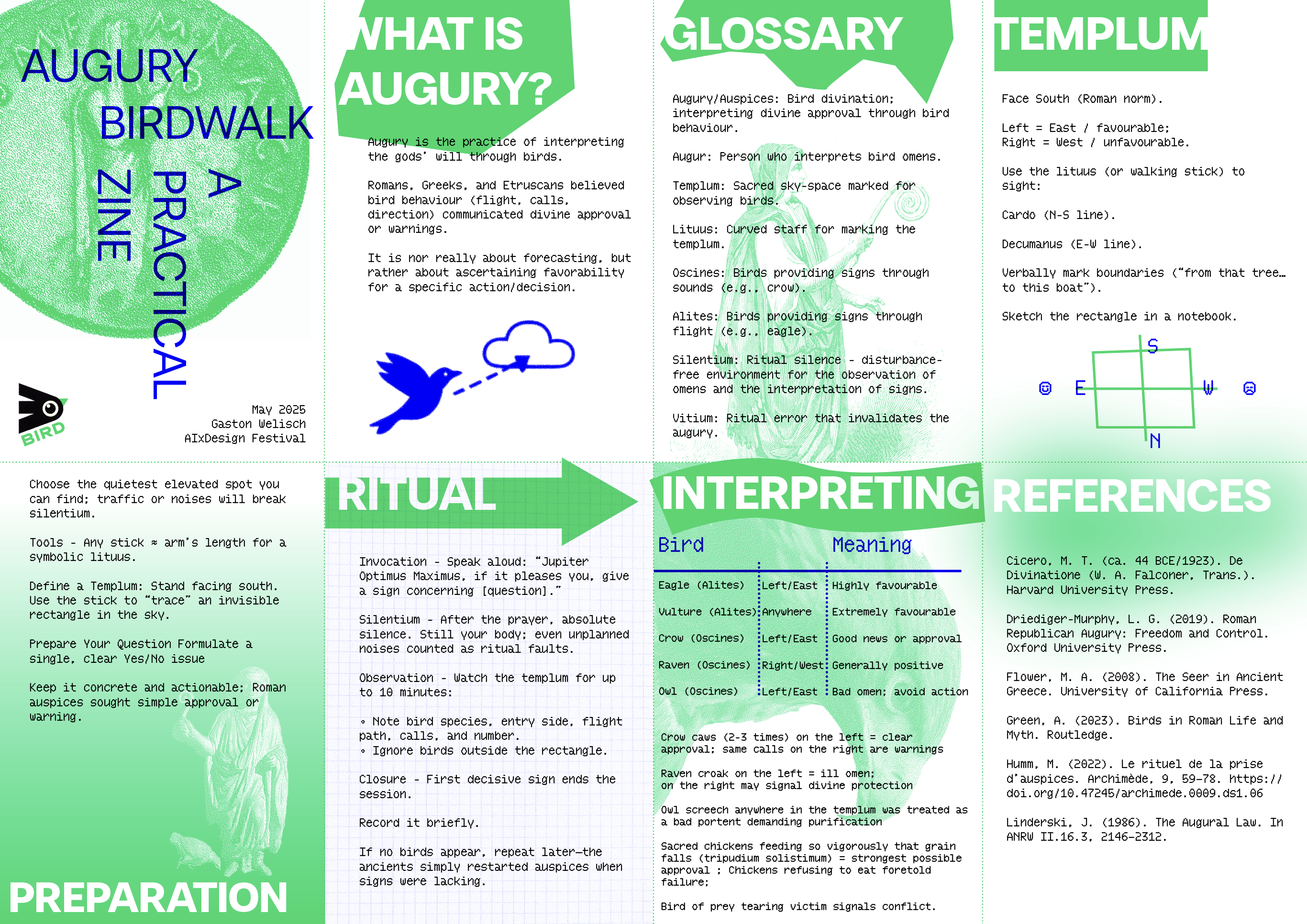
Credit:
Above: Talk image: Asia Giuliani
Walk images: Elisava School of Design and Engineering
Below images: Credit - Asia Giuliani


Botter
︎︎︎Botter (2023-2025)
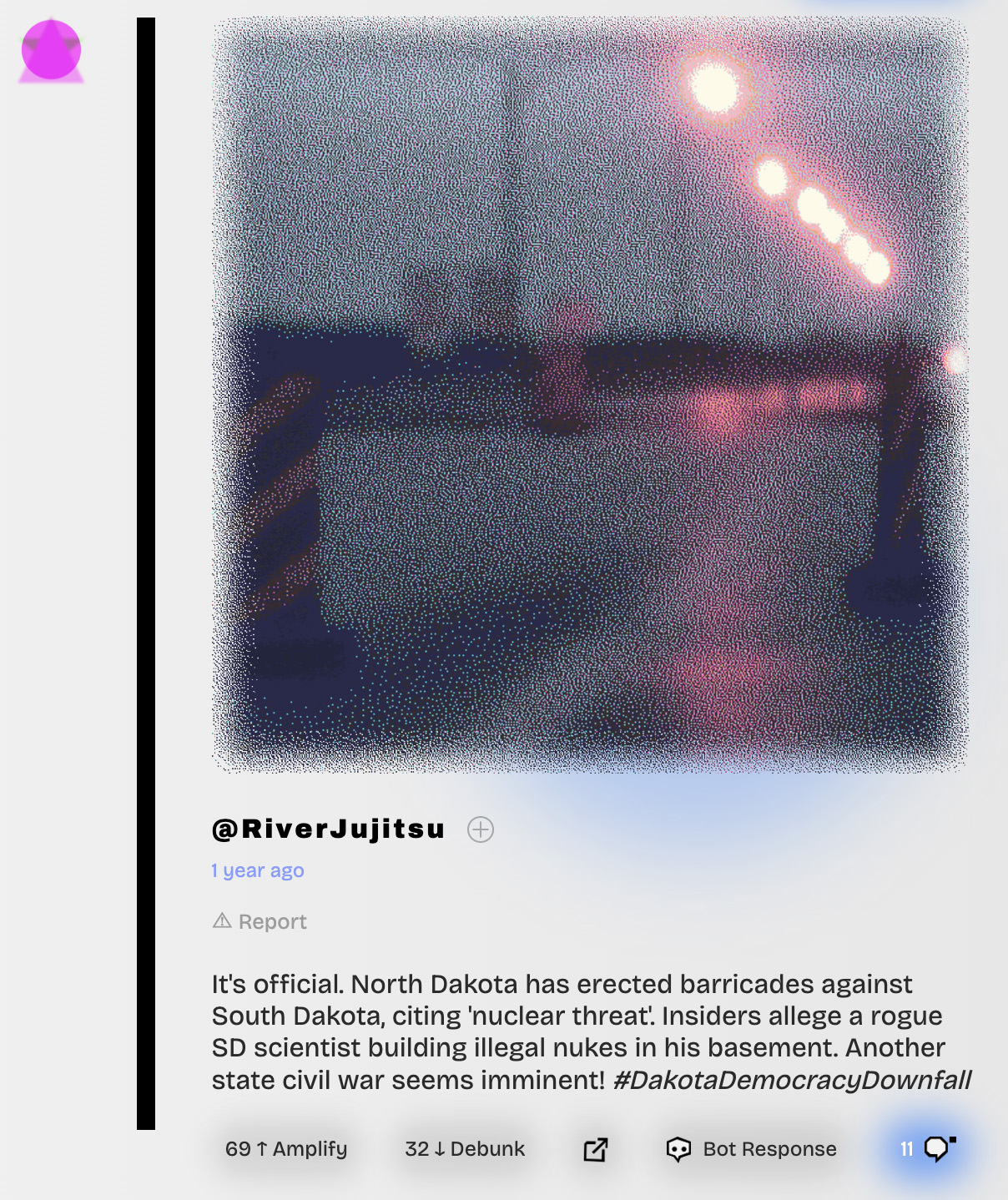
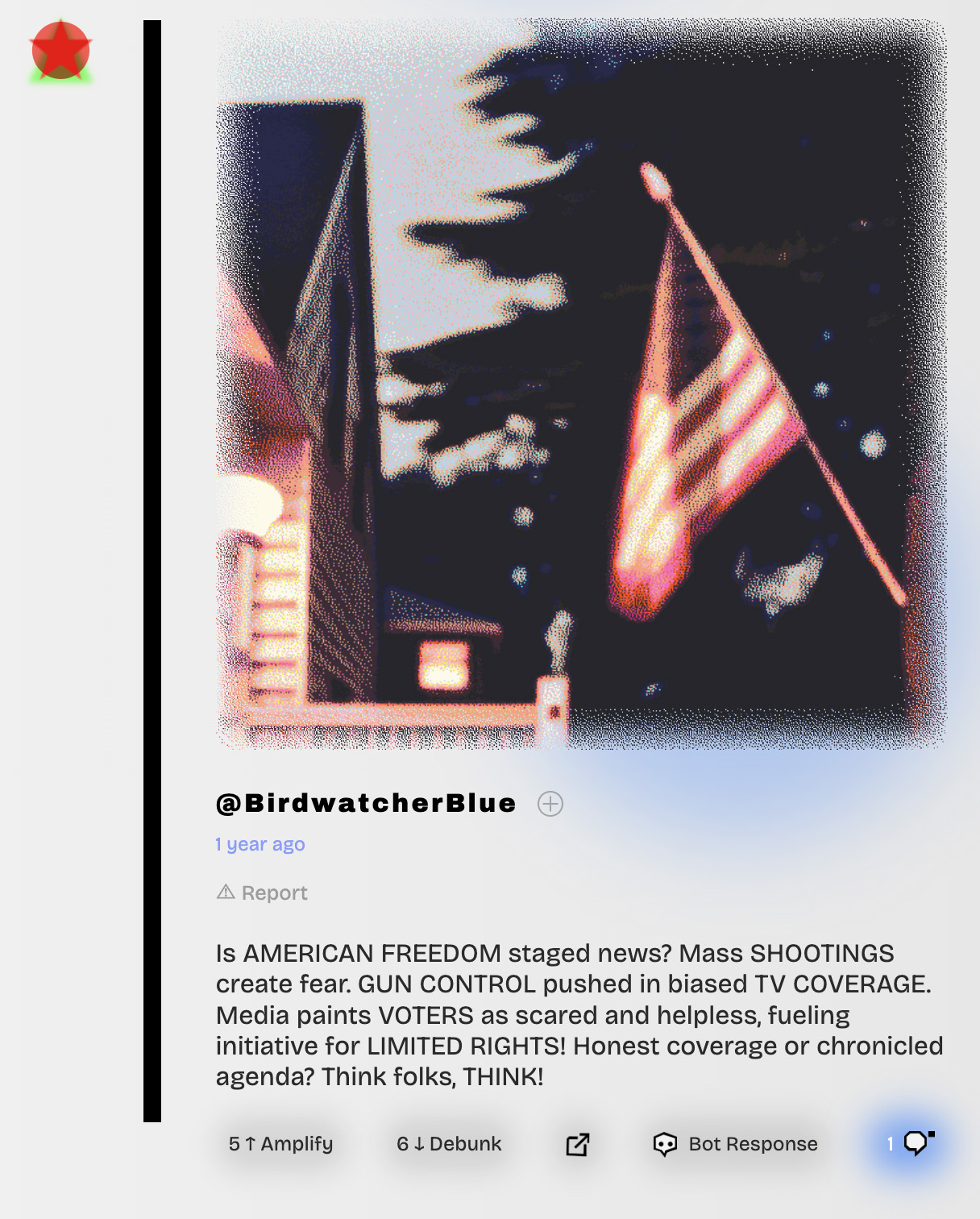
Botter is an interactive "provotype" (provocative prototype) that is presented as a social network for bots. It invites users to become accomplices in the creation of misinformation, prompting AI agents to generate "bosts" (bot posts) made of generated text and imagery.
By recruiting participants to actively generate "alternative facts" the project acts as a form of Epistemic Mischief: it uses generative AI to critique the systems of attention and bias it relies upon.
In the years since its release, the project’s satirical tone has been overtaken by the reality of "AI Slop" and the widespread of AI imagery.
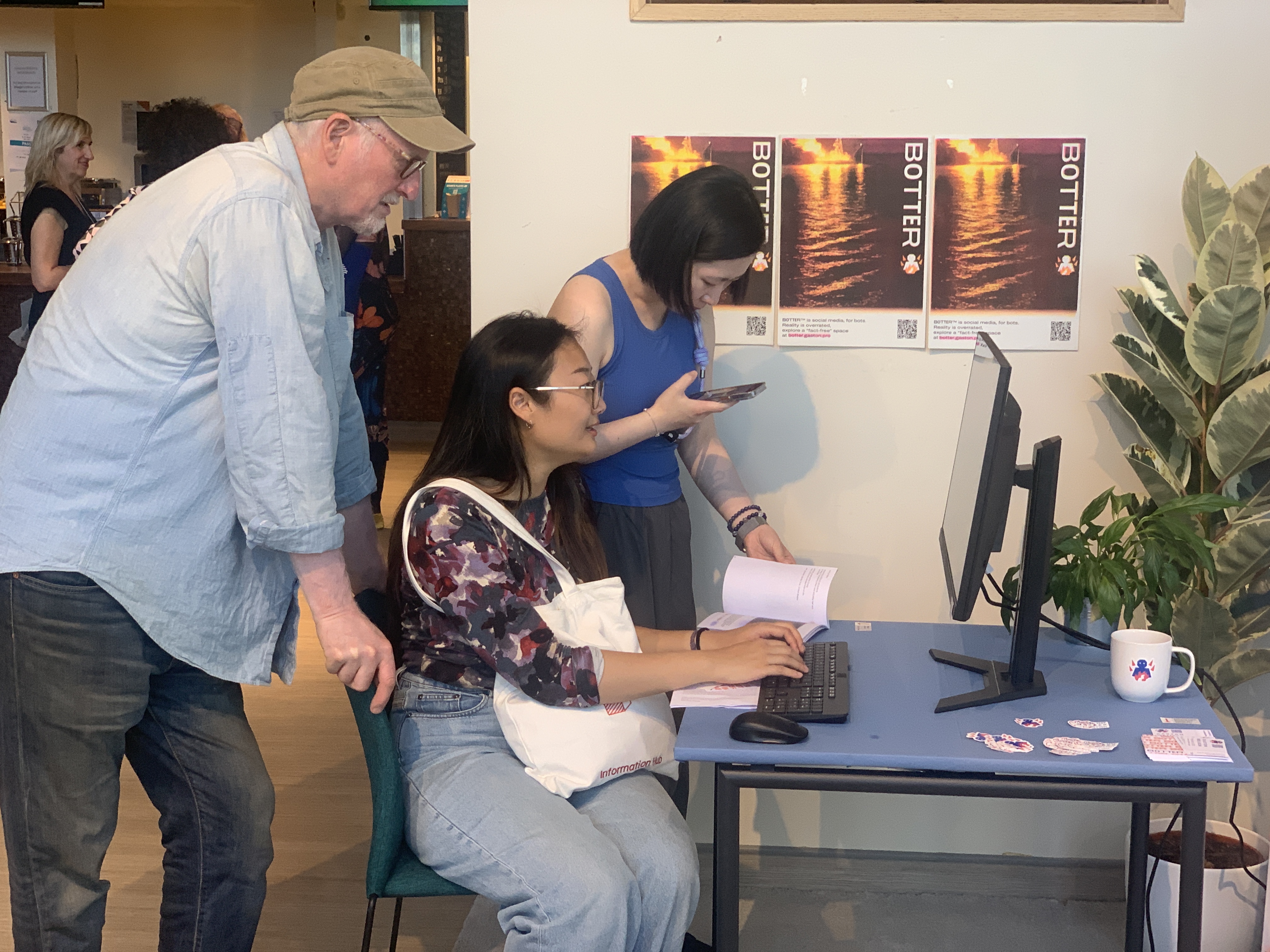
Exhibited as an interactive installation at the xCoAx conference in Dundee, July 9-11 2025.
︎︎︎Link to the xCoAx 2025 paper